0%

As interest in decorative and fashion lenses grows, buyers need more than attractive colors and polished product images. In 2026, comparing manufacturers worldwide means looking closely at product quality, documentation, and supply capabilities. A reliable colored contact lens manufacturer should provide clear product specifications, consistent manufacturing information, and responsive support. Buyers can check details such as lens materials, base curves, diameter, packaging, and batch traceability. Small details matter. Looks matter, too, but they do not tell the whole story.

This guide introduces manufacturers through practical, verifiable factors rather than unconfirmed claims. It considers product range, production capabilities, quality-control practices, communication, and publicly available compliance information. Requirements differ between markets, so readers should verify current local rules before placing orders. Published data can be uneven. No comparison is perfect. Some suppliers share detailed technical documents, while others provide less information online; that gap deserves attention, not guesswork. A manufacturer’s claims should be checked against relevant records and product-specific evidence whenever possible. Consumers should also follow an eye-care professional’s fitting guidance and the lens instructions. Use this overview as a starting point for careful research, not as a substitute for independent checks.
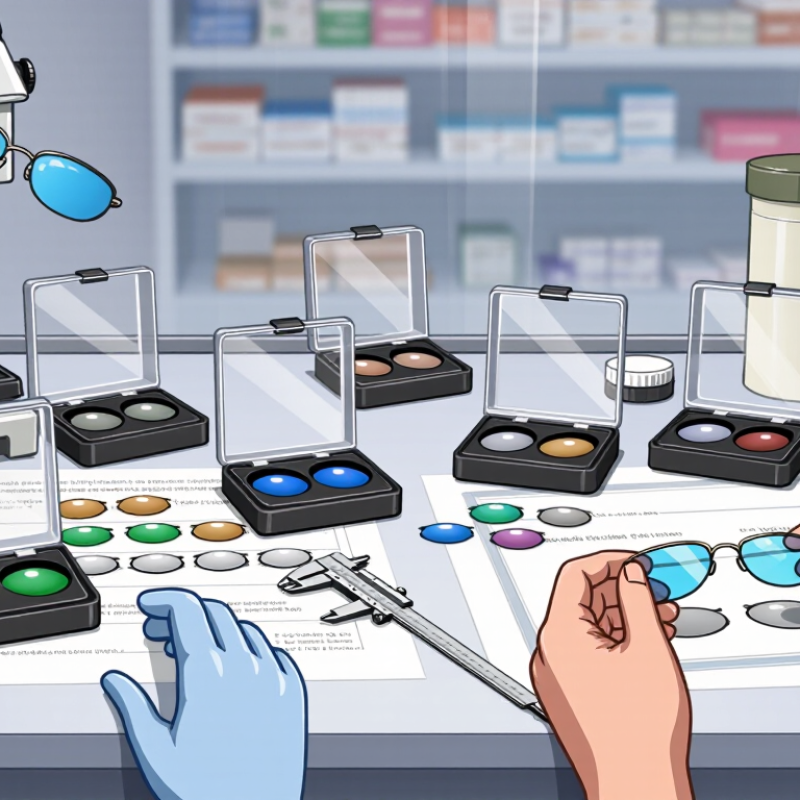
2026 Top Colored Contact Lens Manufacturers Worldwide

Colored Contact Lenses: Types, Materials, and Uses

Colored contact lenses come in three familiar designs: visibility tints, enhancement tints, and opaque tints. Visibility tints are faint and mainly help users locate a lens. Enhancement tints deepen an existing iris shade. Opaque designs alter the appearance of darker eyes more noticeably. The result depends on natural eye color, lighting, and the printed pattern. A sample image cannot predict every wearer’s result.

Material affects more than comfort. Traditional hydrogel lenses hold water, while silicone hydrogel materials generally allow more oxygen to reach the cornea. Neither material guarantees a good fit. Lens thickness, replacement schedule, and individual tear quality matter too. Pigment placement varies by design, so buyers should check product specifications rather than assume all colored lenses are constructed alike. Comfort still varies. A tidy product chart misses that.

Uses range from subtle cosmetic changes to prescription vision correction with a color effect. A qualified eye-care professional can assess fit and explain care instructions, including cleaning and replacement. The WHO’s 2019 World Report on Vision estimates that at least 2.2 billion people have near or distance vision impairment; at least 1 billion cases could have been prevented or remain unaddressed. That figure is not specific to colored lenses, but it underscores why cosmetic appeal should not replace clear vision and eye health. Small details matter.

Colored Contact Lenses: Typical Replacement Schedules

Colored contact lenses are available in daily, two-week, and monthly replacement schedules. The chart shows the typical number of days before replacement, not how long lenses may be worn each day. Actual schedules vary by product; always follow the labeled instructions and advice from an eye care professional.

How Colored Contact Lenses Are Designed and Manufactured

How Colored Contact Lenses Are Designed and Manufactured

Design begins with fit, not color. Engineers specify lens diameter, base curve, thickness, and optical power. The iris pattern is then mapped to preserve a clear central viewing zone. In many designs, colored pigments sit between clear polymer layers, reducing direct contact with the eye. Manufacturing may use cast molding or precision lathing, followed by hydration, sterilization, and checks for power, dimensions, surface defects, and oxygen transmission. Details vary by material and production method. ISO 18369-3 provides measurement methods for contact lens dimensions and properties. Grand View Research estimated the overall global contact lens market at USD 19.8 billion in 2023; its report projected 4.4% annual growth from 2024 to 2030. That figure covers all contact lenses, not colored lenses alone.

Small defects matter. A slightly rough edge or uneven tint can affect comfort and appearance. Quality teams inspect lenses under magnification and test samples for consistency, though no single inspection can predict every wearer’s experience. The design also involves trade-offs: a dramatic pattern may look striking but can feel less natural in daylight.

Tips: Ask whether the color layer is enclosed within the lens, and check that the lens matches your prescription and fit. Never choose by appearance alone. A careful fit still matters.

Leading Colored Contact Lens Manufacturers Worldwide in 2026

Leading colored contact lens manufacturers worldwide in 2026 are best compared by manufacturing controls, material options, and documented quality systems. Grand View Research valued the broader global contact lens market at USD 19.2 billion in 2023 and forecast 8.5% annual growth through 2030. That figure includes clear lenses, so it should not be mistaken for colored-lens sales. Still, it signals a large, competitive sector. Details matter.

For buyers, useful checks include consistent color deposition, breathable materials, stable dimensions, and clear batch traceability. Ask how production defects are monitored, not just how many lenses a factory can make. The U.S. Centers for Disease Control and Prevention has reported that about 45 million Americans wear contact lenses; this is a user estimate, not a colored-lens market count. The U.S. Food and Drug Administration also treats decorative lenses as medical devices, emphasizing professional fitting and proper prescriptions. A polished sample is reassuring, but it cannot show long-term consistency. Rankings can mislead. Look for current technical documentation and independent quality evidence.

How to Compare Manufacturers by Quality, Safety, and Product Range

When comparing colored contact lens manufacturers, look beyond a vivid sample. Ask for documented quality controls, traceability by production lot, and test results for dimensions, optical power, and oxygen transmission. The ISO 18369 series sets requirements and test methods for contact lenses; request reports showing how products are checked against relevant specifications. Ask how pigments are contained and how changes in materials or production are reviewed. Details matter.

Safety deserves equal weight. A CDC analysis published in its 2014 MMWR found that 99% of surveyed U.S. contact lens wearers reported at least one risky care behavior. That figure does not measure factory defects; it highlights why clear wear and care instructions matter. Compare whether manufacturers provide consistent guidance and responsive technical support, not just attractive packaging. Product range matters, too. Check available prescriptions, base curves, diameters, replacement schedules, and color options. A broad catalog is useful only when specifications and test documentation are equally clear. I would still verify records independently; a polished certificate folder is not the same as a complete quality picture.

Global Standards and Market Trends for Colored Contact Lenses

2026 Top Colored Contact Lens Manufacturers Worldwide: Global Standards and Market Trends

Colored contact lens manufacturing now depends on consistent quality, not just attractive shades. The ISO 18369 series describes contact lens terminology and includes methods for measuring lens dimensions and properties. ISO 13485 offers a quality-management framework for medical-device production. Together, these references support disciplined testing, documentation, and batch control. Details matter.

Grand View Research valued the global contact lens market at USD 19.4 billion in 2023 and projected an 8.2% compound annual growth rate from 2024 to 2030. This figure covers all contact lenses, not colored lenses alone. One blind spot remains: public forecasts rarely separate cosmetic shades clearly. Manufacturers should therefore avoid treating overall market growth as proof of demand for every color or design. Pigment distribution, oxygen transmission, edge finish, and color consistency all deserve practical evaluation.

Tips: Ask suppliers for current test records, traceable batch documents, and clear material specifications. Compare samples under daylight and indoor lighting; a subtle shade shift can matter. Not enough. A polished sample cannot replace repeat testing across production lots.

2026 Top Colored Contact Lens Manufacturers Worldwide - Global Standards and Market Trends for Colored Contact Lenses

Global industry overview: regulatory requirements, manufacturing capabilities, quality considerations, and market trends. This is not a company ranking or a market-share dataset.

Data Dimension Global Information Relevance to Manufacturers Reference / Notes
Product scope Colored contact lenses include corrective lenses and lenses intended only to change or enhance eye appearance. Cosmetic-only lenses are regulated as medical devices in major markets, including the United States and the European Union. Manufacturers need to assess the intended use and applicable device requirements; a lens without vision correction is not automatically exempt from regulation. Requirements vary by jurisdiction and product classification.
United States regulation The U.S. Food and Drug Administration regulates contact lenses, including decorative lenses, as medical devices. A prescription is required for contact lenses, including non-corrective decorative lenses. Market access involves applicable FDA device controls, prescription-related requirements, and compliant labeling and distribution. FDA: Contact Lenses.
European Union regulation The EU Medical Device Regulation (MDR) applies to medical-purpose contact lenses. Non-corrective colored lenses are also addressed as products without an intended medical purpose under MDR Annex XVI, with common specifications set out in Commission Implementing Regulation (EU) 2022/2346. Manufacturers must determine the applicable conformity-assessment route and meet relevant safety, performance, documentation, and post-market obligations. EU MDR: Regulation (EU) 2017/745; Common Specifications: Regulation (EU) 2022/2346.
Quality management ISO 13485 specifies quality-management-system requirements for organizations involved in medical-device design and manufacture. A documented quality system supports controlled production, supplier management, traceability, corrective actions, and consistent product release. Certification and regulatory requirements depend on the market and organization. ISO 13485 is a quality-system standard, not a product approval or a guarantee of regulatory clearance.
Contact lens technical standards The ISO 18369 series covers contact lenses, including vocabulary, tolerance requirements, measurement methods, and physicochemical properties. Relevant technical controls can include lens dimensions, optical power, material characteristics, and test methods. The applicable standard and edition should be confirmed for each product and market. ISO standards are technical references; their legal applicability depends on local regulations and conformity pathways.
Manufacturing process Contact lens production can involve polymer processing and lens forming, finishing, hydration where applicable, inspection, sterilization, and packaging. The exact process depends on material and design. Colored designs add requirements for controlling color placement and appearance while maintaining optical, dimensional, and safety specifications. Manufacturing methods and validated process parameters differ across products; no single process applies to all lenses.
Product quality indicators Commonly assessed characteristics include base curve, diameter, optical power where applicable, material properties, package integrity, and visual appearance. Oxygen transmissibility and other performance characteristics are relevant according to product design and applicable requirements. Specifications and acceptance criteria should be established for the individual lens and verified using suitable, controlled test methods. No universal numerical specification applies to every colored contact lens.
Market access and distribution Contact lens requirements can apply across online and physical sales channels. Prescription, labeling, importation, registration, and distributor obligations are jurisdiction-specific. Manufacturers and supply-chain partners need market-specific compliance plans, authorized distribution controls, and reliable product traceability. Online availability does not remove applicable medical-device or prescription requirements.
2026 market trend: regulatory scrutiny Regulatory controls and consumer-safety messaging remain important considerations for both corrective and cosmetic-only lenses. Clear instructions, compliant claims, safety information, and documented post-market processes support responsible market participation. Qualitative trend; no global growth rate or market share is asserted.
2026 market trend: product differentiation Product differentiation may focus on color effects, pattern design, comfort-related attributes, prescription availability, and replacement schedule. Each claim should be supported by appropriate evidence and should not imply a safety or performance benefit that has not been substantiated. Consumer preferences and product availability vary by region.
Market data limitation A complete, consistently defined public dataset ranking worldwide colored contact lens manufacturers by production volume or market share is not provided here. Comparisons should use clearly defined geography, product scope, time period, and independently verifiable data before drawing rankings or market-size conclusions. This table summarizes general standards and industry considerations; it is not legal advice or a verified manufacturer ranking.

FAQS

What comes first when designing colored contact lenses?

Fit comes before color. Engineers set diameter, base curve, thickness, and optical power before mapping the iris pattern.

How is the central viewing area kept clear?

Designers map the iris pattern around a clear central zone. The exact pattern varies by lens design.

Where are colored pigments placed in many lenses?

Pigments are often enclosed between clear polymer layers. Ask how a specific lens contains its color layer.

How are colored contact lenses manufactured?

Production may use cast molding or precision lathing. Lenses are then hydrated, sterilized, and checked. Methods vary.

What quality checks should buyers ask about?

Ask about tests for lens power, dimensions, surface defects, and oxygen transmission. Lot traceability is useful, too.

Why does lens fit matter as much as appearance?

A rough edge or uneven tint can affect comfort. A vivid pattern cannot make a poor fit acceptable.

What documents help compare manufacturers?

Request test reports and documented quality controls. ISO 18369 provides relevant measurement methods, but paperwork alone is not proof.

Does a larger product range always mean better quality?

No. Compare prescriptions, base curves, diameters, replacement schedules, and color options alongside test records. A broad catalog can still leave questions.

Can inspection guarantee every wearer will feel comfortable?

No single inspection predicts every experience. Daylight may also make a dramatic color look less natural. I would still check the fit carefully.

Conclusion

This article explores colored contact lenses from a practical, manufacturing-focused perspective. It introduces common lens types, materials, and uses, then explains how design choices such as color patterns, fit, and comfort inform the manufacturing process. It also surveys the qualities buyers may look for when evaluating leading manufacturers worldwide in 2026, including product range, quality controls, safety practices, and consistency.

The guide offers a framework for comparing each colored contact lens manufacturer without relying on brand claims. It considers how global standards and evolving market trends shape product development, materials, and consumer expectations. Together, these topics help readers understand the factors behind colored contact lens production and make more informed comparisons across manufacturers.

Ethan

Ethan

Ethan is a marketing professional who brings a strong understanding of the company’s products and a practical, customer-focused perspective to his work. He regularly contributes expert articles to the company website, explaining product features, sharing useful insights, and helping readers make......