0%

Choosing a contact lens manufacturer involves more than comparing catalog prices. Global buyers need to assess product quality, production capacity, and the consistency of supply. A lens may look clear in a sample case, yet still require careful review of fit, material information, packaging, and batch records. Details matter.

This guide presents ten manufacturers for buyers to research, not a universal ranking. Companies differ in lens types, private-label services, minimum order quantities, and export experience. Buyers should request current product specifications and quality documentation, then confirm whether each supplier can meet the requirements of their destination markets. Regulatory rules vary. Verify them locally.

Reliable evaluation also means asking practical questions. How are production batches traced? What support is available if a shipment is delayed? Can the manufacturer explain its quality checks in clear, written terms? Independent audits or recognized certifications may help, but buyers should verify their scope and validity. A polished website is not proof. Neither is a low quote.

The right partner depends on the buyer’s products, customers, and distribution needs. Some manufacturers may offer strong technical support but less flexibility on order size. Others may be responsive, yet provide limited public information. That uncertainty deserves attention. Use the profiles below as a starting point, compare evidence directly, and seek qualified professional guidance where product or market requirements are unclear.
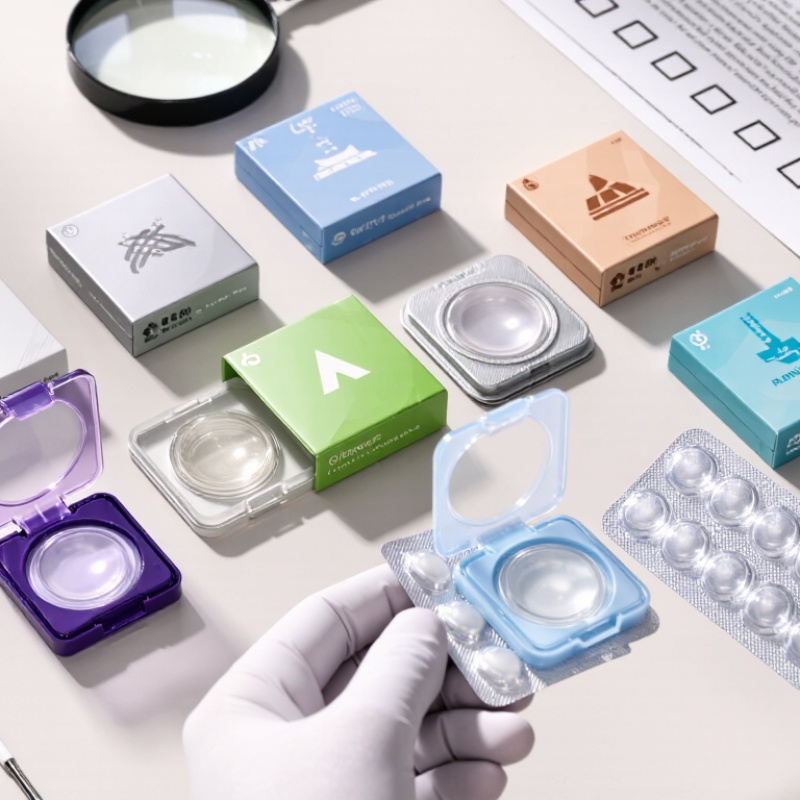
10 Best Contact Lens Manufacturers for Global Buyers

Contact Lens Manufacturing: Product Types and Market Overview

Contact lens manufacturing covers several distinct products. Soft lenses use hydrogel or silicone hydrogel materials and are commonly made through molding or lathe cutting. Rigid gas-permeable lenses are smaller, firmer, and shaped for individual optical needs. Daily disposables, planned-replacement lenses, toric lenses for astigmatism, and multifocal designs serve different wearing patterns. Fit still matters.

Production requires tight control of dimensions, surface quality, hydration, and packaging. A lens may look clear but still cause discomfort if its edge profile or oxygen transmission is unsuitable. Manufacturers typically inspect lenses and seal them in sterile blister packs. Buyers should compare material specifications, replacement schedules, prescription ranges, and quality documentation—not just unit prices. Catalog labels can be vague, and that is worth questioning.

Market estimates offer context, not a purchasing guarantee. Grand View Research valued the global contact lens market at about US$20.4 billion in 2023 and projected an 8.5% compound annual growth rate from 2024 to 2030 in its Contact Lenses Market report. Demand is shaped by vision correction, disposable formats, and demand for specialty designs. Forecasts are not orders. Regional preferences, supply capacity, and product mix can change the picture.

Criteria for Evaluating Manufacturers as a Global Buyer

Global buyers should assess a contact lens manufacturer against the markets, product types, and order volumes they actually serve. Grand View Research valued the global contact lens market at USD 18.6 billion in 2023 and projected an 8.5% compound annual growth rate through 2030. Growth makes capacity worth checking, but market size alone says little about a factory’s reliability. Ask how it handles demand spikes, production changes, and backorders. Request realistic lead times, minimum order quantities, and examples of shipment records. Small details matter.

Quality systems need evidence, not polished assurances. ISO 13485 sets requirements for medical-device quality management systems; buyers should confirm the certificate’s scope and validity. Ask for lot-level traceability, inspection records, and documented procedures for handling complaints and nonconforming products. Not enough alone. Review samples from different production lots, including packaging and labeling, and check that documentation matches the intended destination markets. A certificate cannot show every weak point.

Supply continuity deserves the same scrutiny. Ask whether key materials have backup sources, how disruptions are communicated, and what the manufacturer’s contingency plans cover. Compare promised lead times with past delivery performance, not just a sales estimate. No checklist is perfect. Supplier responses can sound convincing, so verify important claims through audits, records, and product testing. A buyer should also consider whether communication stays clear when something goes wrong; that may be harder to score than price, but it is revealing.

10 Best Contact Lens Manufacturers for Global Buyers — Criteria for Evaluating Manufacturers as a Global Buyer

A practical, evidence-based scorecard for comparing contact lens manufacturing partners. The weighted criteria total 100 points and should be checked against the requirements of each destination market and product category.

Evaluation Criterion Weight Evidence to Request Buyer Verification
Regulatory authorization and market access 18% Applicable market authorizations, declarations of conformity, establishment or device listings where required, and current regulatory inspection records. Confirm the documents cover the specific lens type, manufacturing site, legal manufacturer, and destination market. Check validity with the relevant regulator or authorized database.
Quality management system 15% Current quality-management-system certificate, audit scope, corrective-action records, and documented control of design, production, and supplier changes. ISO 13485 is a widely used medical-device QMS standard. Verify the certificate issuer, validity, site address, and scope. Review recent audit findings and evidence that corrective actions were completed.
Product conformity and technical documentation 12% Product specifications, risk-management documentation, labeling, instructions for use, and applicable testing records. ISO 18369 is a relevant series of standards for contact lenses. Compare technical files and product claims with the applicable contact-lens standards and local regulatory requirements; confirm that the documents match the exact SKU and material.
Safety and performance evidence 10% Biological-safety evaluation, material characterization, dimensional and optical test results, and clinical or other performance evidence appropriate to the product and its intended use. Check that test methods, acceptance criteria, sample identification, and reports are traceable to the marketed product. Seek independent laboratory reports where appropriate.
Sterilization and process validation 10% Sterilization method, validated process parameters, routine monitoring records, and evidence supporting the stated sterility assurance. Relevant process standards depend on the sterilization method used. Review validation and revalidation records, batch-release criteria, deviation handling, and change controls. Confirm that the method is suitable for the lens material and packaging.
Traceability and complaint handling 9% Lot or batch identification system, distribution records, complaint-handling procedure, adverse-event escalation process, and recall or field-action history. Run a mock traceability exercise from finished product to key materials and distribution records. Check response times and documented closure of complaints.
Manufacturing capacity and process control 8% Relevant production-site capacity, equipment and process controls, quality-control plans, yield trends, and evidence of environmental controls appropriate to the operations. Compare demonstrated output with forecast demand and peak-season needs. Confirm that capacity, quality controls, and quoted lead times apply to the proposed production site.
Supply continuity and supplier management 7% Critical-material sourcing controls, approved-supplier monitoring, business-continuity plans, inventory approach, and contingency arrangements for supply interruptions. Identify single-source dependencies, review alternative-source qualification plans, and assess how changes to materials or suppliers are communicated and approved.
Packaging, labeling, and export readiness 6% Packaging-integrity and shelf-life evidence, label-control procedures, language capabilities, shipping documentation, and experience supporting the intended importing markets. Review sample labels and packaging against local requirements, including storage conditions, warnings, lot identification, and expiry-date presentation.
Commercial transparency and support 5% Itemized quotations, minimum order quantities, lead-time assumptions, payment terms, warranty provisions, technical-support contacts, and procedures for handling product changes. Compare total landed cost and contractual responsibilities, not just unit price. Confirm response expectations, ownership of tooling or documentation, and notice periods for changes.

Scoring guidance: Rate each criterion from 0 to 5 based on verified evidence, then multiply the rating by its weight. A certificate or registration alone does not establish product quality or suitability; confirm scope, validity, product coverage, and destination-market requirements before placing an order.

Ten Leading Contact Lens Manufacturers and Their Key Strengths

Global buyers often judge contact lens manufacturers by more than unit price. A strong producer can offer stable material sourcing, repeatable molding, and clear batch records. These details matter when lenses must feel consistent across large orders. Some factories specialize in daily disposable designs, while others support reusable or specialty lenses. Check optical testing, packaging controls, and sample data before placing a large order. Small details count.

A manufacturer’s strengths may also include flexible production runs, dependable lead times, and practical technical support. Ask how it handles lens hydration, edge inspection, and rejected units; precise answers are more useful than polished brochures. For international sourcing, review current quality certificates and product documentation for the destination market. Do not assume one certificate covers every product or region. Some suppliers excel at scale but offer limited customization; smaller teams may respond faster, though capacity can be less predictable. No supplier is perfect. That trade-off deserves attention.

Comparing Product Range, Quality Standards, and Global Reach

Global buyers should compare contact lens manufacturers by range, quality controls, and distribution capacity—not catalog size alone. The World Health Organization’s 2019 World Report on Vision estimated that at least 2.2 billion people had vision impairment, with at least 1 billion cases preventable or unaddressed. This signals broad vision-care needs, though it does not measure contact lens demand. The CDC estimated about 45 million U.S. contact lens wearers in its 2015 report, showing the scale of one established market.

Product range matters in practice. Check whether a supplier offers daily and reusable lenses, toric options, and materials suited to different wear patterns. Then review documented quality systems and testing against relevant standards, such as ISO 18369 for contact lenses. Fit matters. A certificate alone does not prove consistent production, so request current audit records, traceability details, and sample-lot data. Some supplier claims are harder to compare than they look.

Tips: Ask for lead times by destination, not just factory capacity. Confirm packaging languages, shipment tracking, and how shortages are handled. Compare these details across at least two sample orders. A broad global network can reduce delays, but local stock and reliable service may matter more than the number of export markets listed.

Sourcing, Regulatory, and Distribution Factors for International Buyers

Global sourcing starts with product-level evidence, not a polished factory tour. WHO’s World Report on Vision (2019) estimates that at least 2.2 billion people have near or distance vision impairment. At least 1 billion cases could have been prevented or remain unaddressed. These figures indicate broad vision-care needs, not guaranteed demand for a particular lens. Buyers should compare lens materials, wear schedules, production capacity, and quality records against the needs of each target market.

Regulatory readiness needs close review. Check each market’s device classification, registration or authorization pathway, labeling rules, and post-market reporting obligations. Ask manufacturers for current quality-system documentation, test results, and traceable batch records. ISO 13485 certification can support confidence in a quality management system, but it does not guarantee that every product meets every market’s requirements. Small details matter. A certificate cannot replace product-specific verification.

Distribution planning should cover more than freight prices. Confirm shelf-life controls, storage conditions, language requirements, customs documents, and procedures for damaged or returned stock. Request sample shipping records and test whether lot numbers remain readable on outer cartons. A tidy spreadsheet can still conceal a weak handoff between factory, importer, and local distributor. That gap deserves attention before orders scale.

FAQS

What types of contact lenses do manufacturers produce?

Common options include soft hydrogel and silicone hydrogel lenses, plus rigid gas-permeable lenses. Designs include daily disposables, reusable lenses, toric lenses, and multifocal lenses. Fit matters.

How are soft contact lenses made?

Manufacturers commonly use molding or lathe cutting. They control dimensions, surface quality, and hydration. A clear-looking lens can still feel uncomfortable.

What should buyers compare besides price?

Compare material details, replacement schedules, prescription ranges, and quality records. Check the lens type and packaging carefully. Catalog descriptions can be vague.

What quality information should a supplier provide?

Ask for current audit records, traceability details, and sample-lot data. Testing may refer to standards such as ISO 18369. A certificate helps, but it is not the whole story.

How can buyers compare a manufacturer’s product range?

Check for daily and reusable lenses, toric options, and materials suited to different wearing patterns. A large catalog alone proves little.

What does the market outlook suggest?

One estimate valued the global contact lens market at about US$20.4 billion in 2023. It projected 8.5% annual compound growth from 2024 to 2030. Forecasts can change.

What should buyers check about delivery?

Ask for lead times to each destination, shipment tracking, and plans for shortages. Packaging languages also matter. Factory capacity is not the same as local availability.

Why should buyers compare sample orders?

Compare details across at least two sample orders, including delivery time and packaging. This takes extra effort, but claims can look better on paper than in practice.

Conclusion

Choosing the right contact lens manufacturer involves more than comparing prices. Global buyers should first understand the main product categories, such as daily, reusable, specialty, and corrective lenses, and assess how well each supplier’s range matches their market needs. Key evaluation factors include product consistency, quality management, production capacity, technical support, customization options, and experience serving international customers. Comparing these areas can help buyers identify suppliers that offer a suitable balance of range, quality, and global reach.

Before placing an order, buyers should also clarify sourcing arrangements, documentation, applicable regulatory requirements in their destination markets, shipping timelines, and distribution support. A careful review of these factors can reduce supply-chain uncertainty and make it easier to build a reliable long-term partnership. The strongest choice is a manufacturer that communicates clearly, provides appropriate quality information, and can support the buyer’s product and market requirements.

Ethan

Ethan

Ethan is a marketing professional who brings a strong understanding of the company’s products and a practical, customer-focused perspective to his work. He regularly contributes expert articles to the company website, explaining product features, sharing useful insights, and helping readers make......