Featured Medical-Grade Cosmetic & Corrective Lenses
Explore our flagship OEM/ODM contact lens collections manufactured in ISO 13485 cleanroom facilities, audited for European CE MDR and South Korean KFDA distribution standards.
 ISO 13485
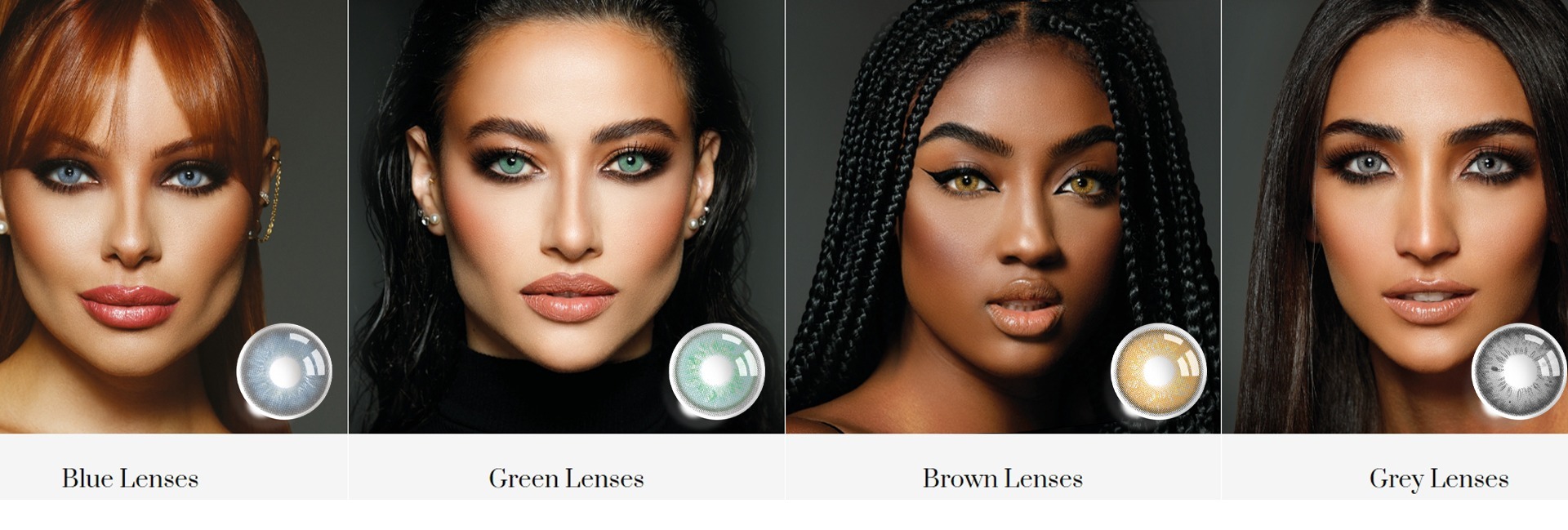
R2 Aier Blue Multi-Tone Lens
Precision cast-molded multi-tone limbal blue designed with 3D color pigment encapsulation for ultra-high tear film oxygen permeability.
 CE Certified
R1 Germanic Green Natural Iris
Subtle olive gradient mimicry engineered for dark irises, preventing pigment exposure via dual-layer sandwich polymerization.
 MDR Annex XVI
R3 God Gray Aesthetic Hydrogel
European market favorite offering soft feathered outer ring transitions and compliant with French and German medical importation guidelines.
 KFDA Standard
R8 Opera Green High-Definition
Korean optical styling paired with precise aspheric curve geometries for enhanced visual acuity and prolonged daily wear comfort.
 ISO 13485
R4 Serene Grey Corrective Series
Customizable refractive index with exact cylinder parameters for astigmatic patients seeking premium cosmetic enhancements.
 CE Certified
R5 Jesus Green Radiant Iris
Ultra-thin center profile ensures optimal corneal respiration, tested against strict cytotoxicity standards under ISO 10993.
 FDA Export
R9 Opera Blue Vibrant Hue
Nano-dot matrix printing guarantees smooth light refraction without pupil line obstruction, tailored for international private retail brands.
 OEM Custom
R6 Glow Iris Luminescent Blue
Comprehensive batch traceability with individualized lot numbering, meeting rigorous South Korean and European clinical distributor protocols.
Why International Importers Rely on Our Production Ecosystem
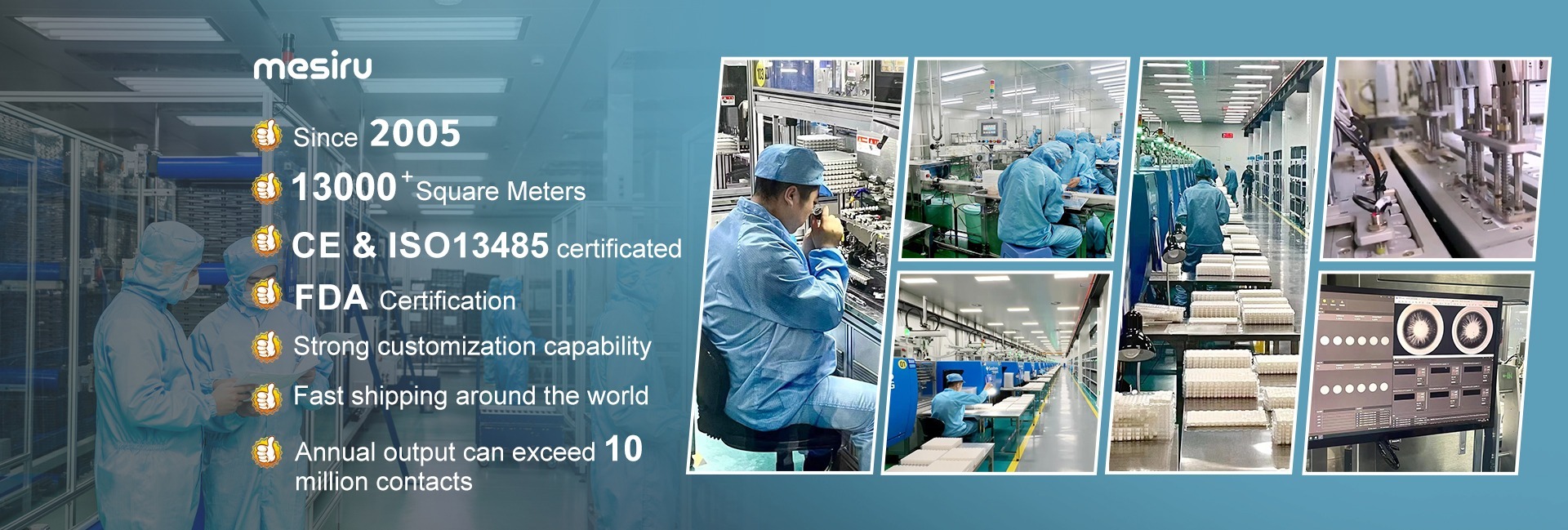
Combining the high-precision cast molding technology pioneered in Korean optical facilities with agile, high-capacity cleanroom manufacturing to meet stringent global medical directives.
Full CE MDR & KFDA Alignment
Every product batch is supported by complete Technical Documentation files, Declarations of Conformity under EU MDR 2017/745 Annex XVI, and bio-compatibility dossiers compliant with ISO 10993 requirements.
Sandwich Micro-Pigment Tech
Pigment layers are sealed chemically inside biocompatible HEMA polymer substrates. Non-leaching guarantees that chromatic agents never make direct contact with human corneal endothelial layers.
Class 100,000 Cleanroom
Automated vacuum robotic de-molding, precision hydration, and computer-vision Automated Optical Inspection (AOI) eliminate surface burrs, edge irregularities, and optical power variations.
Turnkey OEM/ODM Packaging
End-to-end custom foil blisters, luxury rigid collection boxes, serialized GS1 barcodes, multilingual instructions for use (IFU), and regulatory labeling tailored to retail destinations worldwide.
Bridging Korean Optical Aesthetics with Strict EU Regulatory Compliance
For cross-border distributors, optical chains, and digital beauty brands, procurement is no longer just about vibrant color variations. The enactment of the European Union Medical Device Regulation (EU) 2017/745 reclassified all contact lenses—including non-corrective zero-power plano lenses under Annex XVI—as Class IIa medical devices.
Similarly, the South Korean Ministry of Food and Drug Safety (MFDS / KFDA) maintains rigorous control over contact lens biomaterials, ensuring hydrogel and silicone-hydrogel matrices achieve verifiable wettability, minimal protein deposition, and exceptional dimensional stability.
Information Gain Insight: Our manufacturing infrastructure unifies high-yield cast molding tooling with complete Class IIa technical dossiers, allowing European importers and Korean cosmetic brand owners to pass border clearance without customs seizures or notified body non-conformities.

| Evaluation Parameter | Standard Cosmetic Lens | CE Certified Korea Exporter Standard | Clinical Advantage for Importers |
|---|---|---|---|
| Color Embedding | Surface pad printing | Double-sided Sandwich Embedding | Zero corneal mechanical irritation |
| Regulatory Dossier | Self-declared CE (Outdated) | MDR 2017/745 Annex XVI + ISO 13485 | Immunity to customs seizure across EU borders |
| Edge Configuration | Standard straight edge | Aspheric multi-curve edge bevel | Consistent tear exchange & day-long hydration |
| Defect Control | Random batch sampling | 100% CCD Automated Optical Inspection | Defect rate guaranteed under 0.05% |
| Sterilization Assurance | Basic wet autoclaving | Validated EN ISO 17665 Steam Cycle | Sterility Assurance Level (SAL) 10⁻⁶ |
Future Procurement Trends in the Global Contact Lens Industry
Strategic procurement directors must plan forward. We analyze the technological shifts, consumer preferences, and compliance evolutions shaping the 2025–2030 optical landscape.
Shift to Silicone Hydrogel Daily Disposables
While traditional HEMA materials dominate the cosmetic sector due to superior pigment saturation, consumer demand is pivoting decisively toward high oxygen transmissibility (Dk/t > 80).
- Next-gen fluorosilicone macromers reducing lipid buildup.
- Rapid expansion of single-use daily color blister packs.
- Higher margins for omnichannel optical franchises.
Zero Tolerance for Non-Traceable SKUs
Global health authorities (US FDA, EU competent authorities, Korean MFDS) now mandate individualized Unique Device Identification (UDI) linked to international databases like EUDAMED.
- Mandatory GS1 DataMatrix barcodes on primary blisters.
- Stringent technical audits on raw material monomer purity.
- Exporters without Notified Body backing will be phased out.
Hybrid Cosmetic & Toric Prescriptions
Consumers no longer tolerate choosing between astigmatism correction and cosmetic iris enhancement. The market for made-to-order prescription cosmetic lenses is surging at 14.8% CAGR.
- Dynamic prism ballast stabilization for astigmatism.
- Natural gradient limbal rings tailored to regional eye colors.
- Low-MOQ agile production cycles for rapid seasonal launches.
Emerging Technologies in Contact Lens Fabrication
Examine how cutting-edge optical engineering, advanced polymer science, and automated packaging are revolutionizing contact lens manufacturing worldwide.
Micro-Cavity Cast Tooling
Modern precision engineering utilizes ultra-high-precision nickel-plated molds capable of sub-micron surface tolerances, eliminating microscopic edge burs that cause foreign body sensations.
This allows high-speed automated cycle rates while maintaining 100% repeatability of base curve geometry across multi-million piece manufacturing runs.
Internal Wetting Agent Infusion
Instead of relying purely on post-production surface coatings that degrade over time, modern formulas incorporate polyvinylpyrrolidone (PVP) or hyaluronic acid (HA) into the core polymer mix.
The result is a sustained low contact angle throughout 16 hours of continuous wear, dramatically reducing dry-eye complaints in digital device environments.
Recyclable PP Blister Systems
Leading Korean and international exporters are phasing out multi-layered composite packaging in favor of mono-material polypropylene blister shells that allow 100% post-consumer recyclability.
Additionally, secondary packaging utilizes FSC-certified paperboard and soy-based non-toxic inks, aligning with European corporate social responsibility (CSR) procurement criteria.
Frequently Asked Questions for B2B Importers & Exporters
Essential regulatory, logistic, and technical answers compiled by our international trade and regulatory compliance department.
What regulatory documentation is required to import CE-certified color contact lenses into the EU?
How does Korean contact lens manufacturing compare with other Asian export hubs?
What is the minimum order quantity (MOQ) for custom private label (OEM) projects?
How do you prevent pigment migration and corneal irritation in color lenses?
What incoterms, logistics channels, and lead times do you support for export shipments?
Can you supply corrective powers and toric options for astigmatic patients?
Connect with Our Global Optical Engineering & Export Team
Whether you require regulatory clearance dossiers for European distribution, customized Korean-style private label collections, or stable large-scale cast-molding supply, our technical specialists are ready to collaborate.