Featured OEM/ODM Cosmetic Optics & Custom Ancillaries
Precision-engineered cast-moulded hydrogels, patented sandwich-encapsulated color matrices, and dedicated private-label accessories.
R2 Aier Blue Natural Series
Multi-tone ice-blue pigment distribution engineered for high opacity over hyper-pigmented dark irises without limbal spillover.
R1 Germanic Olive Green
Micro-dot matrix mimicking natural iris trabecular meshwork. Calibrated for seamless daylight blending in premium salon retail.
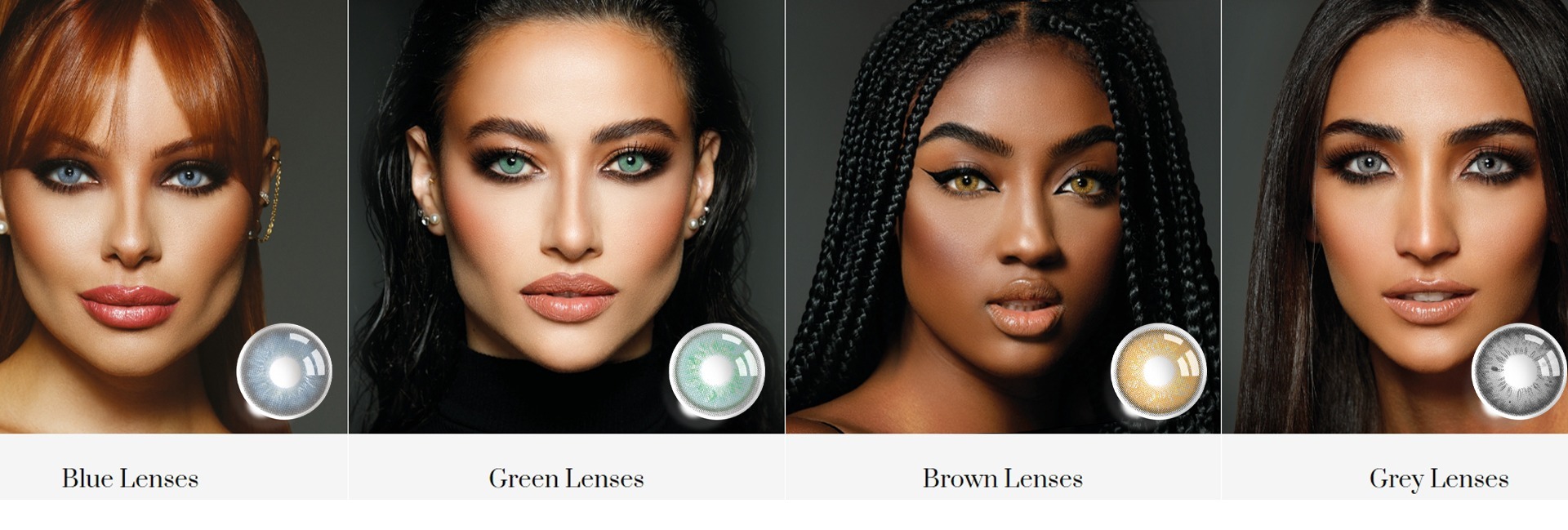
R3 God Gray Aesthetic Lens
Tri-tone cold slate matrix with subtle pupil-dilation feathering. Sandwich embedded, totally non-leaching dye layer.
R8 Opera Forest Emerald
Vibrant cosmetic grade lens built on high oxygen-permeable hydroxyethyl methacrylate hydrogel for comfortable 12h wear.

R6 Glow Iris Luminescent Blue
Features radial gradient micro-grooves that scatter ambient light to deliver deep, dynamic optical reflections across eyes.

Natural Wood Lined Presentation Case
Eco-luxe rigid timber presentation cases with thermoformed medical polymer lining. Engineered for high-end boutique sets.
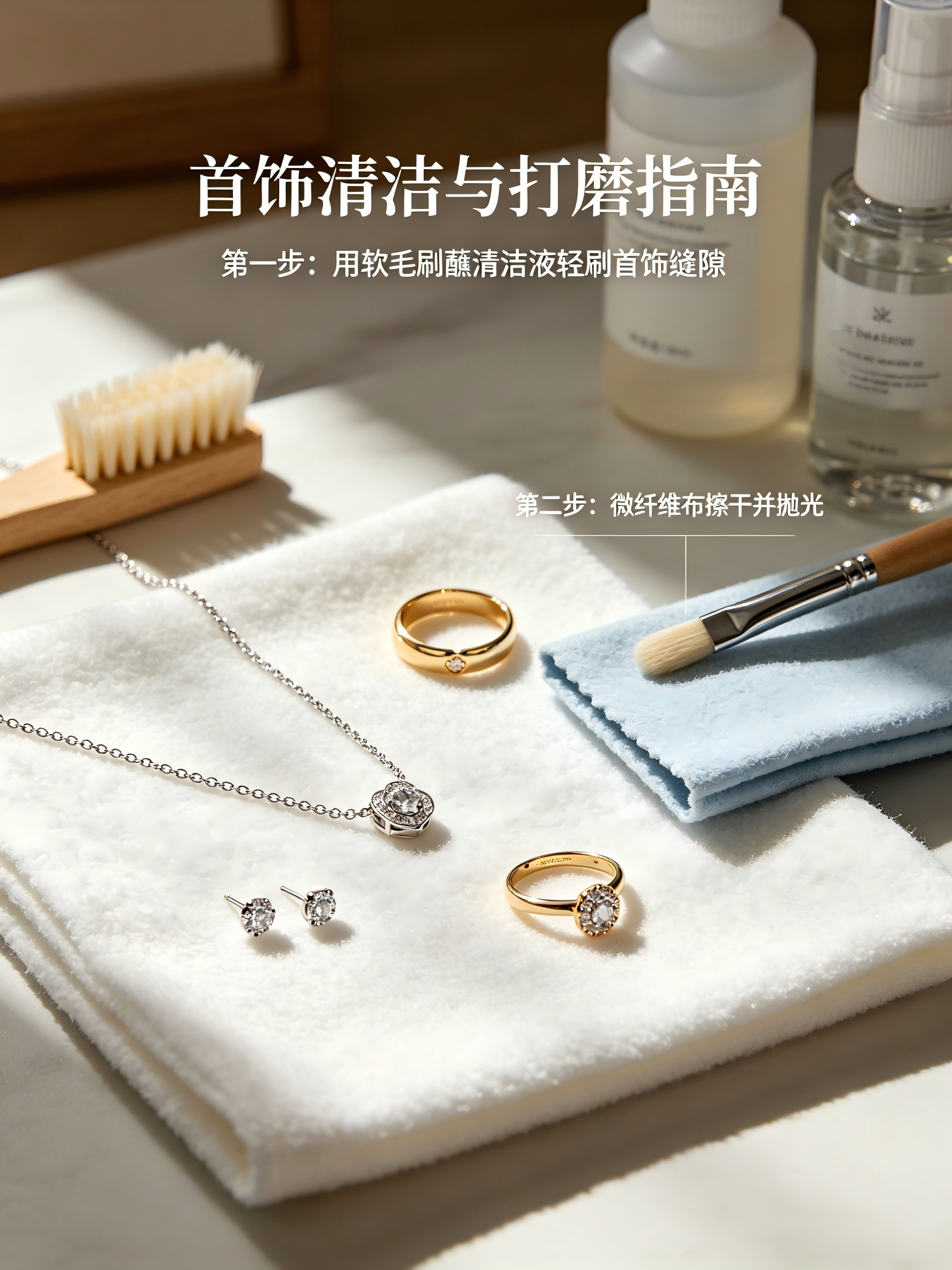
Optical Ultrasonic Sanitizing Applicator
Non-scratch micro-applicators and ultrasonic sterilizing tools providing consumer hygiene compliance for extended-wear cosmetics.
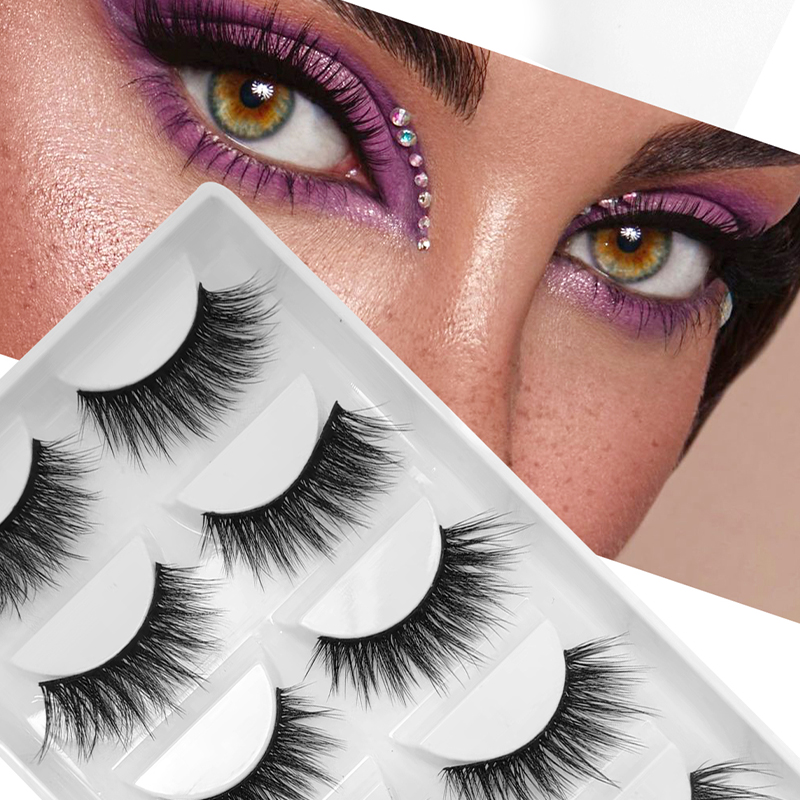
Private Label Synthetic Strip Lashes
Ophthalmologist-tested weightless eye lash strips tailored for cross-selling bundles alongside private-label contact lens series.
1. Global Procurement Dynamics & The Evolution of Cosmetic Contact Lenses
The global cosmetic contact lens sector has transitioned from a niche, seasonal theatrical product into a staple of daily beauty and visual expression. Driven by advancements in polymer science, biometric eye tracking, and fast-evolving social-commerce algorithms across TikTok, Instagram, and Amazon, international buyers face completely new sourcing criteria. For professional procurement directors, sourcing from China is no longer solely about unit labor arbitrage; it is an evaluation of regulatory resiliency, microbiological safety, precision cast molding automation, and rapid-turnaround private labeling.
Historically, the industry was bottlenecked by lathe-cutting methods that limited complex color layer geometries and produced thicker, less comfortable profiles. Today, our facility operates high-speed fully automated cast moulding lines. Monomers are precision-dosed into matched quartz and optical-grade steel dies under cleanroom laminar flows, ensuring uniform edge geometries, zero burrs, and consistent sagittal depths that eliminate corneal chafing. As international optical retailers merge aesthetic lenses into prescription lines, China's manufacturing ecosystem provides an unprecedented marriage of optical precision (plano up to -12.00 D, custom astigmatic cylinders) with photorealistic, high-chroma pigmentation.
Sandwich Technology (CIP)
Color Pigment Isolation technology embeds non-toxic, FDA-approved organic dyes firmly within hydrogel strata. Pigments never directly touch corneal epithelium or tarsal conjunctiva.
Equilibrium Water Content (EWC)
Carefully balanced 38% to 42% water formulations preserve structural tear break-up time (TBUT), preventing dehydration-induced lens shrinkage during 14-hour extended wear.
EU MDR Annex XVI Compliance
Full technical dossiers aligned with Non-Corrective Contact Lens classifications. Traceable lot serialization, biocombatibility testing, and authorized European representation.
2. Future Procurement Trends: Where the Industry Is Headed (2025–2030)
Procurement teams planning product pipelines over multi-year cycles must account for four tectonic industry shifts:
A. Silicon-Hydrogel (SiHy) Infiltration into Color Matrices: While poly-HEMA hydrogel dominates cosmetic lenses due to its pigment binding capabilities, the next paradigm is third-generation Silicone Hydrogel formulations. Delivering Dk/t values exceeding 80–100, these lenses satisfy clinical demands for high oxygen transmissibility while achieving ultra-vibrant colors without matrix opacity degradation.
B. The Dominance of Daily Disposables (1-Day Modality): Driven by eye safety concerns, daily disposable cosmetic lenses are outpacing quarterly and annual modalities across North America and Europe. Sourcing strategies are moving toward massive automated runs of 10-pack and 30-pack single-use blisters, reducing consumer reliance on antimicrobial multi-purpose disinfecting solutions.
C. Bespoke Biometric Inclusivity: Mass-market, generic lenses often ignore iris undertone variance. European buyers now require specialized sub-collections: high-density radial opacities engineered to lighten dark Mediterranean/Asian irises, alongside sheer, limbal-only translucent rings meant to enrich light Nordic/Celtic eyes.
D. Sustainable and Anti-Counterfeit Packaging: Environmental legislation across the EU is targeting secondary packaging waste. Leading OEM programs adopt FSC-certified folding cartons, water-soluble soy inks, reduced-foil blister lidding, and tamper-evident NFC tags verifying pharmaceutical authenticity.
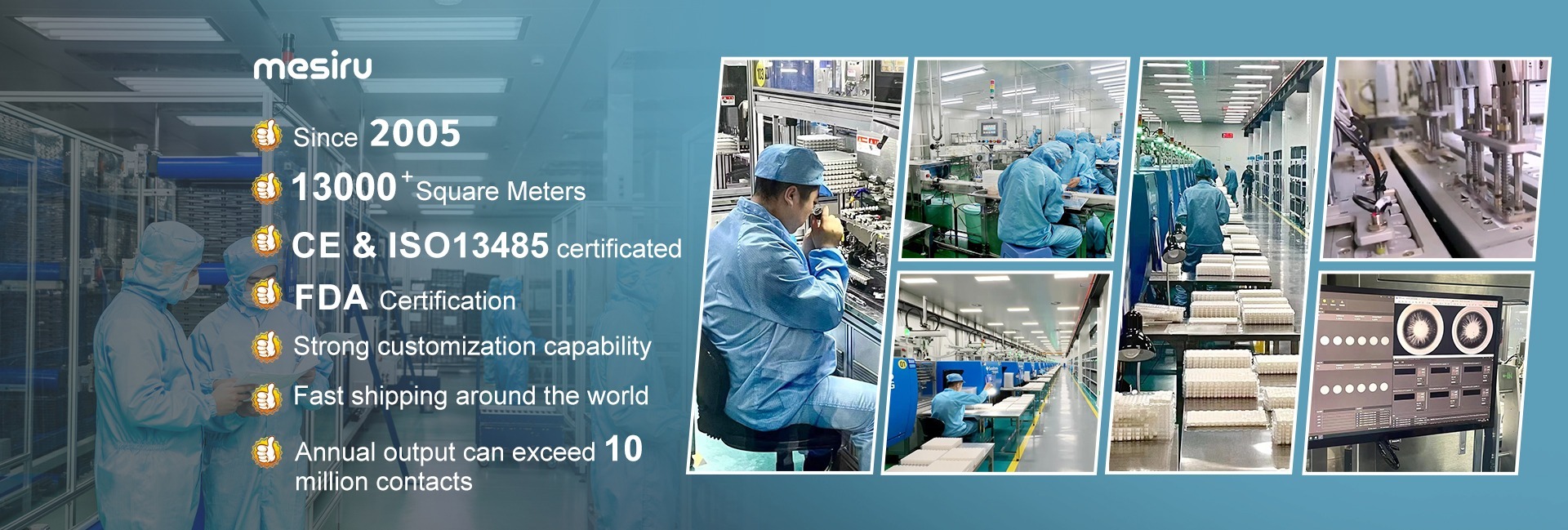
Inside Shenzhen Mesirulens Cleanroom Manufacturing
Located in the heart of China's advanced photonics and optical manufacturing corridor, our production complex combines Class 100,000 cleanroom environments with continuous automated vision inspection. Every stage—from pre-polymer degassing to UV/thermal polymerisation, un-moulding, precision hydration, and terminal autoclave sterilisation—is tracked through our integrated MES (Manufacturing Execution System).
Our pigment encapsulation technique ensures that colored contact lenses achieve medical-device safety standards without compromising cosmetic intensity. Furthermore, by pairing proprietary optical manufacturing with turnkey custom secondary packaging—from plastic-lined artisan boxes to automated carton sealing—we enable overseas brands to go from conceptual artwork to shelf-ready retail delivery within 4 to 6 weeks.

Frequently Asked Questions by Global Contact Lens Importers
Critical operational, regulatory, and quality control clarifications for international buyers.
How does your factory ensure that color pigments do not cause corneal cytotoxicity or abrasion?
We utilize an advanced Cast-Moulding Semi-Embedded Sandwich (CIP) process. The organic, pharmaceutical-grade cosmetic pigments are applied inside a concave polymer layer and sealed with an optical-grade HEMA cap before polymerisation occurs. The pigment is completely enclosed within the cross-linked poly-HEMA hydrogel matrix. Every batch undergoes rigorous ISO 10993 cytotoxicity, ocular irritation, and systemic toxicity testing to guarantee zero pigment leaching during wear or lens storage.
What documentation do you provide for clearance under EU MDR Annex XVI for non-corrective cosmetic lenses?
In accordance with the European Medical Device Regulation (EU) 2017/745 (specifically Annex XVI governing contact lenses without a medical purpose), we provide comprehensive Technical Files. This includes our CE Certificate from an accredited Notified Body, Declaration of Conformity (DoC), ISO 13485:2016 Medical Device Quality Management certification, clinical evaluation summaries, biocompatibility reports, French/English bilingual Instructions for Use (IFU), and validated accelerated aging/shelf-life stability data.
What is your standard Minimum Order Quantity (MOQ) for custom private-label branding and design?
For existing warehouse in-stock patterns featuring custom private-label exterior carton packaging and localized blister foil printing, our MOQ begins at just 500 pairs per design. For completely bespoke ODM iris print developments—such as unique color blends, custom diameters (DIA), base curves (BC), or specialized toric astigmatic powers—our production run typically starts at 5,000 units per master shade, with flexible distribution across diopter power scales.
Can your facility formulate custom water content percentages and diopter powers?
Yes. While our standard baseline is an optimal 40% water content for maximum tear stability, we can formulate ranges between 38% and 55% depending on target market demands. We produce powers ranging from Plano (0.00 D) down to -10.00 D in 0.25 D increments (0.50 D steps above -6.00 D), alongside custom base curves (8.4 mm to 8.8 mm) to fit diverse demographic ocular anatomical profiles.
What quality control protocols are implemented prior to shipping export consignments?
Every single contact lens is subjected to Automated Optical Inspection (AOI) running high-resolution machine vision cameras to identify edge defects, tear notches, bubble voids, center thickness anomalies, and pattern misalignments. Following seal-packaging into medical PP blisters with buffered saline, batches undergo terminal steam autoclave sterilization at 121°C for 30 minutes, supported by bioburden assays and sterility assurance testing.
Build Your Private Label Contact Lens Brand with Industry Leaders
Consult with our optical engineers and international regulatory specialists today. Request free sample kits, compliance dossiers, or direct turnkey production pricing for your market launch.