China Top Korean Contact Lens Supplier Manufacturer & Supplier
Global OEM/ODM Whitepaper: Engineering High-Pigment Korean Aesthetic Circle Lenses with Medical-Grade Full-Cast Molding and International Regulatory Compliance
3,000+
Certified Active SKUs
Class 100K
Cleanroom Standard
100%
Optical Cast Inspection
50+ Countries
Global Regulatory Footprint
Featured B2B Catalog
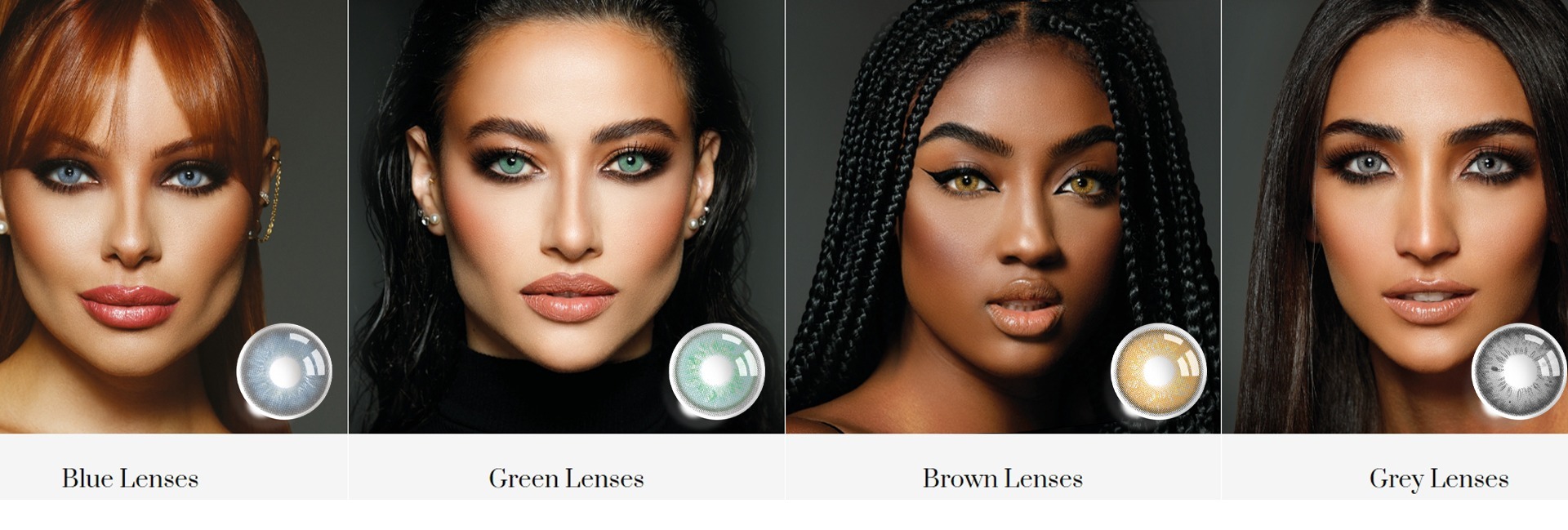
Signature Korean Aesthetic Contact Lens Collections
Discover our top-tier cosmetic hydrogel contact lenses engineered to Korean micro-pixel pigmentation standards, optimized for global private labeling, optical retail distribution, and cross-border beauty e-commerce.
The Global Sourcing Paradigm: Why Top B2B Buyers Source "Korean Style" Contact Lenses from Leading Chinese Manufacturers
The global cosmetic contact lens sector has undergone a profound structural shift over the past decade. For years, South Korea maintained undisputed dominance in cosmetic lens visual trends, famously pioneering the “Ulzzang circle lens,” delicate gradient limbal rings, and hyper-realistic multi-tonal iris micro-printing. However, modern international enterprise procurement requires more than artistic design; it requires uncompromising medical-device compliance, rapid supply chain elasticity, high-volume production yields, and competitive unit economics. This commercial reality has established a robust industrial nexus: China has emerged as the premier manufacturing powerhouse for Korean-aesthetic contact lenses, bridging avant-garde K-beauty visual culture with medical-grade automated manufacturing.
Shenzhen Mesirulens Technology Co., Ltd. operates at the vanguard of this industrial convergence. As a specialized OEM/ODM manufacturer, Mesirulens combines proprietary high-precision optical cast-molding technologies with dedicated cosmetic iris design studios. By utilizing multi-curve cast tools and automated nano-pigment dot-matrix encapsulation, Mesirulens delivers the nuanced, translucent depth expected of top-tier Korean ocular aesthetics while maintaining the strict manufacturing tolerance (ISO 13485:2016, EU MDR 2017/745 Annex XVI, US FDA 510(k) traceability) necessary for global pharmaceutical and optical chain distribution.
Deconstructing the Value Proposition: Design vs. Scale
International brand owners, European optical chains, and multi-channel beauty retailers frequently encounter a critical dilemma when procuring directly from boutique Korean workshops: limited production capacity, elongated lead times (often 60 to 90 days), rigid Minimum Order Quantities (MOQs), and fragmented certification dossiers. In contrast, partnering with a premier Chinese contact lens manufacturer engineered for international compliance delivers structural procurement advantages:
Massive Scalability & Inventory Depth: Advanced facilities operate automated continuous cast-molding lines capable of producing tens of millions of lenses annually, maintaining over 3,000 active SKUs in stock for rapid dispatch within 3 to 7 business days.
Sandwich Encapsulation Technology: Zero pigment migration risk via precision multi-layer hydrogel containment, ensuring colorants never interface directly with the corneal epithelium or palpebral conjunctiva.
Agile Customization Infrastructure: Comprehensive private label packaging turnarounds—incorporating multilingual (French, German, Spanish, English) compliance inserts, tamper-evident blister seals, and tailored carton configurations—delivered within weeks rather than quarters.
Procurement Foresight
Future B2B Procurement Trends in Cosmetic & Korean Contact Lenses (2025–2030)
Procurement directors and category managers in the eyewear, cosmetics, and cross-border e-commerce domains must navigate an increasingly complex matrix of regulatory compliance, consumer physiological awareness, and digital supply chain integration. The next half-decade will be defined by five pivotal sourcing trends:
1. EU MDR Annex XVI Compliance Enforcement
Cosmetic lenses without medical prescription are now explicitly regulated under EU 2017/745 Annex XVI. Retailers can no longer import uncertified colored contacts. Sourcing will exclusively funnel toward verified manufacturers possessing full Notified Body technical files, validated declarations of conformity, and audited post-market surveillance (PMS) mechanisms.
2. Rise of Daily Disposable (1-Day) Modalities
While yearly and monthly replacement schedules historically dominated the Korean aesthetic market, sanitary awareness is driving explosive demand for Daily 1-Day cosmetic lenses. Sourcing plans must accommodate high-cavitation blister molding lines capable of producing daily hydrogels at razor-thin cost parity.
3. Omnichannel Digital Assets & Virtual Try-On
B2B buyers now evaluate suppliers based on digital value-add. Leading manufacturers supply calibrated 4K on-eye photography, 3D glint renders, and AR (Augmented Reality) iris maps compatible with Shopify, TikTok Shop, and Instagram VTO filters to accelerate retail sell-through.
4. Hybrid Corrective & Toric Cosmetic Lenses
Over 30% of cosmetic lens consumers require astigmatism correction or high myopia accommodation. The market is aggressively pivoting from plano-only (0.00 power) fashion lenses to precision-stabilized prismatic ballast toric color lenses with custom cylinder and axis parameters.
Global distributors are bypassing intermediate brokers in favor of integrated DDP (Delivered Duty Paid) shipping via air and expedited rail, backed by Alibaba Trade Assurance and pre-cleared customs classification for sterile Class IIa medical consumables.
Material Engineering
Biocompatible Material Evolution: Hydrogel, Silicone Hydrogel & Nano-Pigment Architecture
The physical interaction between a cosmetic contact lens and the pre-corneal tear film requires acute mechanical balancing. Unlike transparent corrective lenses, color lenses incorporate solid mineral pigments (such as Titanium Dioxide, Iron Oxides, and Phthalocyanine Blue) that can alter polymer polymerization dynamics, lens modulus, and oxygen permeability if not engineered with surgical precision.
Material Classification
Polymer Formulation
Dk/t (Oxygen Transmissibility)
Water Content (%)
Clinical Performance & Intended Channel
Standard Hydrogel (2-HEMA)
Poly(2-hydroxyethyl methacrylate)
18 - 25 Dk/t
38% - 42%
Optimized for daily wear cosmetic use; exceptional dimensional stability and tear-film wetting. Preferred for K-beauty retail.
Phosphorylcholine (PC) Hydrogel
HEMA + 2-methacryloyloxyethyl phosphorylcholine
28 - 35 Dk/t
48% - 55%
Biomimetic surface resisting protein adsorption; ideal for sensitive eyes and extended daily comfort programs.
Advanced Silicone Hydrogel (SiHy)
Fluoro-silicone macromer crosslink matrix
80 - 130 Dk/t
38% - 45%
High oxygen flux preventing corneal hypoxia; targeted at premium optical chains and clinical optometry private labels.
The 3-Layer Sandwich Printing Technology Explained
A non-negotiable hallmark of reputable Chinese manufacturing is the Full-Cast Sandwich Encapsulation Method. During this process, the anterior optical surface is cast, a sub-micron colored pattern is applied using biocompatible reactive ink pad printing, and a sealing matrix layer of optical monomer is injected and thermally polymerized. The pigment particles become physically permanently entrapped inside the hydrogel polymer network. This guarantees three critical physiological safety standards:
Zero Surface Roughness Degradation: The posterior and anterior surfaces remain mirror-smooth (Ra < 0.02 µm), preventing palpebral conjunctiva irritation and mechanical friction.
Complete Leaching Prevention: Extensive organic solvent extraction and autoclave endurance testing verify that zero toxic chromophore ions leach into the tear matrix.
Unimpeded Corneal Respiration: Microporous dot-matrix patterning prevents solid pigment barrier formation, ensuring uniform oxygen diffusion across the entire corneal surface.
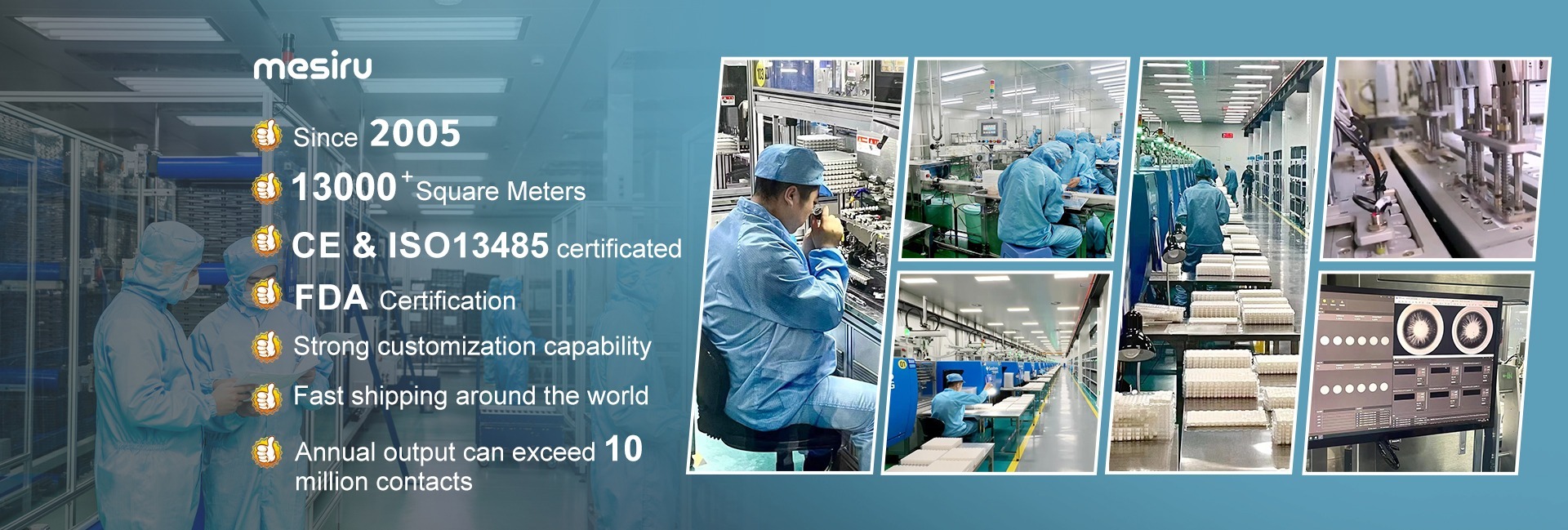
Mesirulens operates one of the most technologically advanced medical-contact-lens production complexes in Asia. Spanning comprehensive cleanroom facilities and backed by certified on-site third-party verifications (Alibaba.com / TÜV Rheinland / SGS), our facility is engineered specifically to eliminate cross-contamination, streamline high-mix low-volume private label orders, and deliver pristine batch consistency.
Class 100,000 Cleanroom Automation
Micro-filtered atmospheric conditions maintaining stringent positive air pressure, HEPA filtration, and real-time microbiological particulate monitoring to guarantee sterile blister integrity prior to steam terminal sterilization.
Ultra-Precision CNC Mold Fabrication
Our in-house optics toolroom utilizes sub-micron diamond lathe tooling to generate optical cast inserts with optical surface tolerances down to ±0.005mm, guaranteeing identical base curve (8.6mm) and diameter (14.0–14.5mm) geometry across millions of units.
Automated AOI 100% Inspection
Every single lens undergoes automated Automated Optical Inspection (AOI) for edge fraying, bubble defects, center thickness uniformity, chromatic alignment, and diopter optical verification before immersion in sterile buffered saline.
Beyond contact lenses, Mesirulens manufactures complete ocular ecosystems, supplying matching multipurpose contact lens disinfecting solutions, ultrasonic contact lens cases, travel kits, and blister packaging options. This provides brand owners with a consolidated one-stop supplier capable of assembling complete retail-ready kits in compliant presentation cartons.
B2B Due Diligence
Frequently Asked Questions for Enterprise Importers
Clear, authoritative technical answers addressing regulatory governance, private label manufacturing workflows, customization parameters, and international logistics.
How do Chinese-manufactured Korean aesthetic lenses comply with EU MDR 2017/745 Annex XVI?
Under European Medical Device Regulation (EU) 2017/745, Annex XVI specifically classifies contact lenses without a corrective intended purpose under the same stringent regulatory scrutiny as corrective devices (Class IIa). Shenzhen Mesirulens provides comprehensive technical documentation portfolios including Notified Body CE Certification, Declaration of Conformity (DoC), Biological Evaluation Reports (ISO 10993 cytotoxicity, ocular irritation, sensitization), Clinical Evaluation Reports (CER), and verified labeling files with full UDI (Unique Device Identification) traceability. We also print compliant French, German, Spanish, or bilingual IFU (Instructions for Use) leaflets, allowing importers to satisfy national surveillance authorities across all EU member states seamlessly.
What is the minimum order quantity (MOQ) and lead time for OEM private label projects?
For in-stock catalog designs paired with custom private label carton packaging and branded blister foil printing, our standard OEM MOQ begins at 500 to 1,000 pairs across mixed shades. For bespoke ODM projects involving exclusive iris pattern generation, custom tint pantones, or unique base curve/diameter specifications, the typical development run starts at 5,000 to 10,000 pairs. In-stock trial orders dispatch within 3 to 7 business days, while customized OEM production runs require approximately 20 to 30 working days from final artwork confirmation and diopter power curve allocation.
Can you support custom prescription power ranges, astigmatism (toric), and multi-focal designs?
Yes. Our optical engineering infrastructure supports plano (0.00D) up to high myopia (-1.00D to -8.00D in 0.25D increments; -8.00D to -10.00D in 0.50D increments). For optical retail chains and ophthalmic brands, our ODM department manufactures custom toric cosmetic lenses engineered with dynamic prism-ballast stabilization, delivering precise cylinder powers (-0.75 to -2.25 DC) and axis angles (10° to 180° in 10° steps) while preserving exact Korean cosmetic color registration and pupil aperture centering.
How is pigment safety and color-fastness verified during transit and prolonged shelf life?
Safety is verified through accelerated stability testing per ISO 11987 standards, simulating a 5-year shelf life in sterile packaging. Because our lenses employ cast-mold sandwich entrapment rather than superficial surface printing, colorants are encased within an impervious HEMA polymer shield. Lenses undergo continuous rubbing abrasion tests, saline boiling autoclave tests, and solvent extraction assessments without experiencing pigment liberation, discoloration, or polymer embrittlement.
What shipping terms (Incoterms) and customs documentation do you supply?
We offer flexible commercial Incoterms including EXW, FOB Shenzhen/Hong Kong, CIF, DAP, and comprehensive DDP (Delivered Duty Paid) via express air courier (DHL/FedEx/UPS, 5–8 days transit) or ocean/rail freight for bulk container volumes. Every shipment is accompanied by a Commercial Invoice, Packing List, Certificate of Origin (CO), Batch Release Certificate of Analysis (CoA), and sterilized batch verification records, ensuring frictionless clearance through EU, North American, Latin American, and Southeast Asian customs checkpoints.
Partner with China's Foremost Korean Contact Lens Manufacturer
Accelerate your brand launch with medical-grade precision, over 3,000 certified ready-to-ship SKUs, bespoke OEM packaging design, and full regulatory documentation dossiers. Connect directly with our international commercial team today.