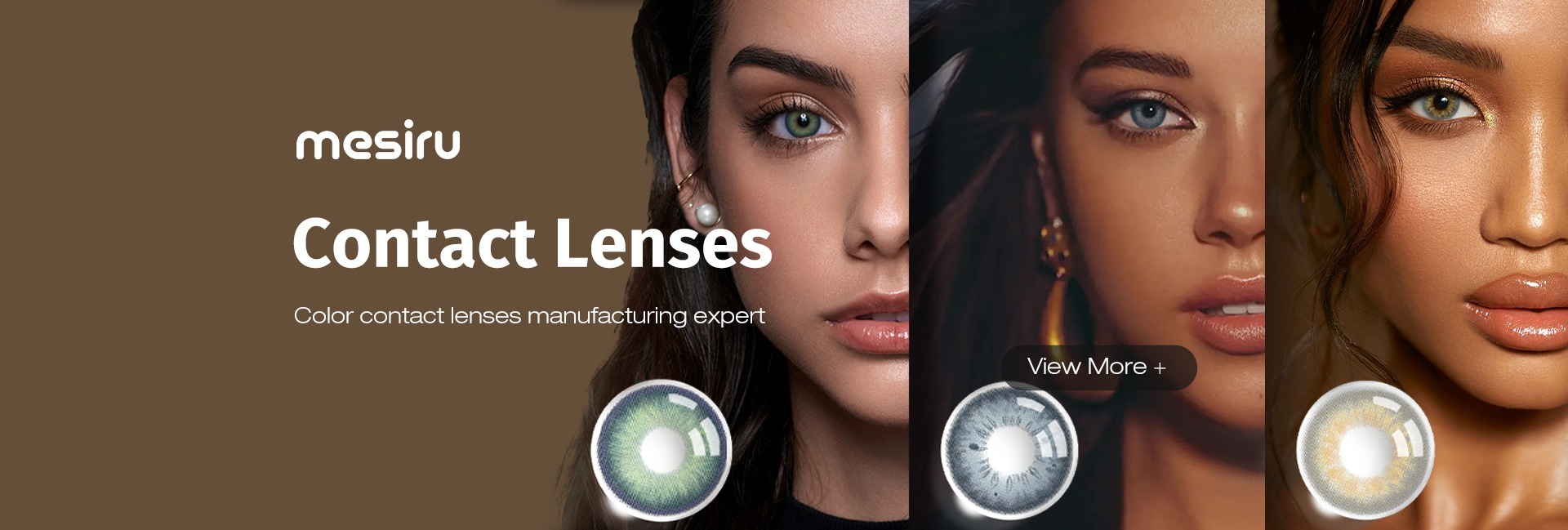
ISO 13485 & CE Certified Medical Device Manufacturer

China Top Private Label Contact Lens Manufacturer & Exporter

Global OEM/ODM optical engineering whitepaper, turnkey private label solutions, and medical cleanroom manufacturing for international distributors, opticians, and cosmetics brands.

Enterprise Product Portfolio

Featured OEM/ODM Contact Lenses & Packaging Collections

Precision-engineered cast-moulded hydrogel lenses, cosmetic color formulations, and customized turnkey optical packaging compliant with international pharmacopeia standards.

3,000+
Active SKU Formulations
100%
Optical AOI Lens Inspection
100k
Class Cleanroom Standard
7-10 Days
Expedited Global Dispatch
Industry Authority Whitepaper

The Evolution of Private Label Contact Lens Manufacturing in China

The contact lens industry has transitioned from localized prescription medical devices into a multi-billion-dollar global synergy between ophthalmic engineering and cosmetic self-expression. As the world’s leading hub for advanced polymer processing, China’s contract manufacturing ecosystem combines precision cast-moulding technology with rapid supply chain integration.

Modern overseas distributors, optical chains, and fast-beauty DTC brands require more than low unit costs. Sustainable enterprise expansion demands stringent adherence to the EU Medical Device Regulation (EU) 2017/745 (MDR) Annex XVI, FDA 510(k) traceability, ISO 13485 quality management systems, and bio-compatible color encapsulation. Shenzhen Mesirulens Technology Co., Ltd. serves as an end-to-end OEM/ODM powerhouse, bridging the gap between clinical biocompatibility and dynamic aesthetic demand.

Mesirulens Manufacturing Industrial Complex
Strategic Sourcing Insights

Future Procurement Trends in Private Label Contact Lenses (2025–2030)

Key market vectors shaping procurement strategies for international distributors, e-commerce brand aggregators, and optical practitioners.

1. Mandatory MDR Annex XVI Harmonization

The regulatory leniency previously enjoyed by plano (non-corrective) cosmetic lenses has completely ended in the European Union. Procurement officers now mandate comprehensive Technical Files, Clinical Evaluation Reports (CER), and Post-Market Surveillance (PMS) protocols directly from the OEM partner before committing to seasonal purchase orders.

2. Hybrid Prescription & Cosmetic Cross-Over

Procurement teams are shifting inventory mix allocations. Where inventory was once divided strictly between clear corrective lenses and 0.00D plano cosmetic items, modern buyers require continuous ranges spanning from -0.50D to -8.00D across all top-selling fashion shades, enabling single-SKU conversion in multi-channel optics retail.

3. Ultra-Low MOQs with Agile Blister Branding

To hedge against fast-evolving cosmetic trends driven by social video platforms, enterprise buyers demand "Split-Batch Delivery." This operational structure enables clients to hold unsealed sterile bulk inventory in China while ordering custom secondary blister and box packaging printed on demand in lots as small as 500 to 1,000 units.

R&D & Chemical Innovation

Technological Frontiers in Contact Lens Engineering

Understanding how cutting-edge polymer formulations and manufacturing methodologies translate into clinical safety and competitive margins.

Evaluation Parameter Traditional Cast Moulding (Legacy) Mesirulens 3-Layer Sandwich Technology Next-Gen Silicone Hydrogel (SiHy)
Pigment Isolation Surface pad printing (risk of corneal contact) 100% Embedded between hydrogel matrices Encapsulated inside high-Dk monomer blend
Oxygen Permeability (Dk/t) 11 – 15 Dk/t (basic daily wear) 20 – 28 Dk/t (extended comfort wear) 80 – 120+ Dk/t (maximum ocular breathability)
Water Content Index 38% (tends to dehydrate late day) 40% – 42% (balanced tear-film retention) 38% – 48% with internal wetting agents
Edge Profile Geometry Standard round bevel (occasional friction) Precision Laser Cut + Micro-tapered edge Aspherical thin-profile peripheral design
Compliance Certification Basic ISO 9001 standard ISO 13485, CE (MDR compliant), FDA Full Medical Device Class IIa/IIb clearance
Class 100,000 Cleanroom Contact Lens Workshop

The Critical Importance of Sandwich Pigment Encapsulation

The primary failure vector in inferior cosmetic contact lenses is pigment leaching or surface roughness that damages the corneal epithelium. In our Shenzhen cleanroom facility, we utilize Dual-Polymer Sandwich Technology.

Micro-pigments (titanium dioxide, phthalocyanine blue, and iron oxides) are precision printed directly onto a baseline optical layer, followed by a secondary cross-linked HEMA monomer topcoat. The entire lens undergoes a 121°C terminal steam sterilization process. This guarantees that the eye is exposed only to an ultra-smooth, biocompatible hydrogel surface while maintaining vivid color saturation and tear-exchange dynamics.

Inquire Now
Enterprise Competitive Edge

Why Tier-1 Importers Partner with Shenzhen Mesirulens

Consolidated manufacturing muscle, international documentation, and turnkey retail-ready logistics engineered for high-growth private labels.

Class 100,000 Cleanroom

Automated casting lines operating under strict particulate, positive air-pressure, and micro-organism surveillance exceeding GMP guidelines.

3,000+ Stock SKUs

Massive standing ready-to-ship inventory across natural, iris-enlarging, dramatic cosplay, and subtle nude shades for rapid mixed-batch sampling.

Turnkey OEM/ODM

Bespoke artwork creation, localized regulatory IFU leaflets, multi-language label printing, custom blister foils, and branded display kits.

Direct EU/US DDP Shipping

Seamless door-to-door delivery with duty prepaid (DDP) logistics, clearing European Union and North American customs without clearance bottlenecks.

Strategic Procurement Knowledge Base

Frequently Asked Questions by Contact Lens Importers & Brands

Practical commercial, technical, and regulatory answers directly compiled by our engineering and export compliance directors.

What regulatory documentation is required to legally import and distribute private label contact lenses in the European Union?
Under Regulation (EU) 2017/745 (MDR) Annex XVI, all contact lenses—including non-corrective cosmetic plano lenses without refractive power—are regulated as Class IIa medical devices. Importers must hold a valid EU Declaration of Conformity (DoC) referencing the manufacturer's CE certificate issued by an accredited Notified Body. Mesirulens provides comprehensive technical documentation, including biological safety evaluation (ISO 10993 cytotoxicity, ocular irritation, and systemic toxicity), stability studies, sterilization validation reports (EN 556-1), and validated multi-language IFU (Instructions for Use) leaflets formatted for French, German, Italian, and Spanish compliance.
What are the minimum order quantities (MOQs) for custom private label packaging versus in-stock catalog lenses?
For existing, factory-standard blister designs across our 3,000+ stock formulations, our MOQ is as low as 50 to 100 pairs per shade for trial market verification. For fully customized private label cartons, blister foil stamping, and personalized barcode imprinting with your proprietary brand name, MOQs generally start at 500 to 1,000 units per collection. For complete custom ODM pattern development (creating unique iris matrices, bespoke limbal ring diameters, or proprietary silicone hydrogel polymer recipes), MOQs begin at 10,000 pairs with amortized tooling fees.
How does cast moulding compare to lathe cutting in mass production contact lens quality?
Lathe cutting involves mechanical turning of dry polymer buttons on CNC lathes; while flexible for niche custom prosthetic lenses, it suffers from surface microscopic tool marks, higher unit costs, and lower oxygen permeability consistency. Cast moulding—the gold standard used across all Mesirulens lines—injects liquid monomer into precision optical quartz/steel tools. This delivers molecular-level surface smoothness, exact optical reproducibility across millions of units, identical edge thickness profiles, and eliminates the microscopic burrs that cause wearer discomfort.
Can you support custom toric parameters for astigmatic patients in colored lenses?
Yes. Through our specialized ODM engineering department, we manufacture custom toric color contact lenses utilizing prism-ballast or dynamic peri-ballast stabilization geometries. We can customize sphere powers from plano down to -9.00D, cylinder powers (CYL) from -0.75D to -2.75D in 0.50D increments, and axes from 10° to 180° in 10° intervals. Because toric lenses require precise rotational alignment on the cornea to prevent blurred vision, our engineering integrates stabilized rotational markings and weight-compensated color printing.
What quality assurance processes prevent blister leaks, microbial contamination, and color fading?
Every production batch undergoes a three-tier inspection protocol: First, 100% automated optical inspection (AOI) with high-speed digital machine vision scrutinizes lenses for tear defects, edge notches, and center thickness deviations. Second, hermetic foil blister seals undergo high-vacuum bubble leak detection to guarantee sterile container integrity. Third, random batch samples undergo accelerated aging incubation, microbial bioburden testing, and spectrophotometric colorfastness testing to ensure that pigments do not degrade in buffered saline throughout their full 5-year shelf life.
Direct Factory Partnership

Build Your Global Contact Lens Brand with China's Premier Manufacturer

Whether you are launching a DTC beauty startup, expanding an established optical chain, or scaling an Amazon/TikTok Shop enterprise, Shenzhen Mesirulens provides the clinical safety, regulatory documentation, and production bandwidth your brand requires.