
High Quality Natural Color Plastic Lined Wooden Packing Boxes with Customized Logo Option Size 15*10
- Application Boutique Retail Presentation
- Customization Hot Stamping / Laser Engraving
- Material Sustainable Wood + PP Lining
Explore our production capabilities across standard cosmetic SKUs, therapeutic prescriptions, and dedicated sterile packaging frameworks tailored for global optical distributors.
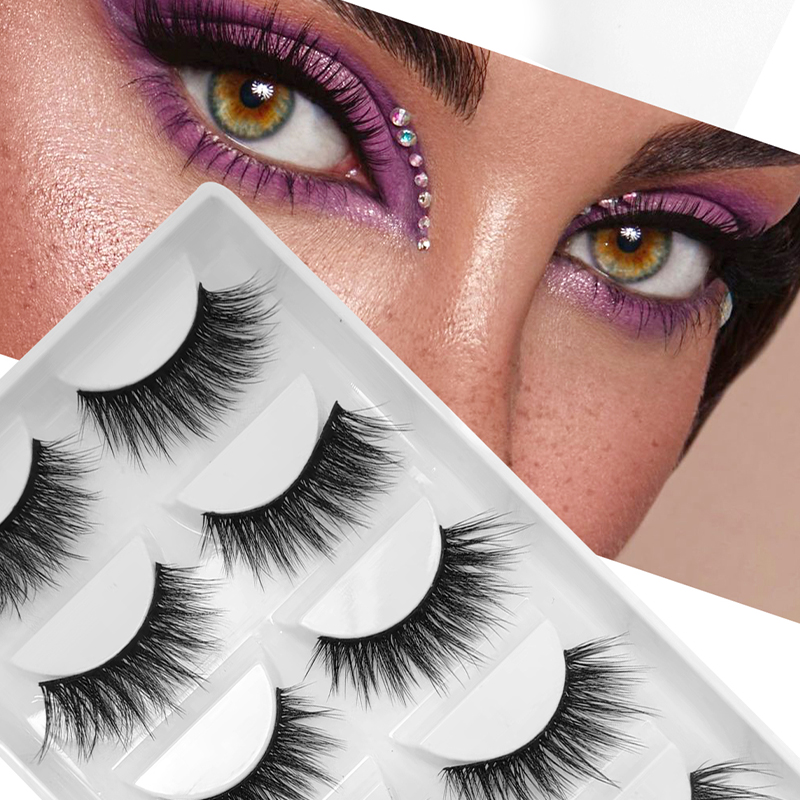


Directly integrating cleanroom precision, regulatory dossier support, and advanced chromatic casting into turnkey optical supply chains across Europe and North America.
We eliminate intermediaries. From vector artwork proofing, custom PP/glass packaging, and blister seal heat stamping to localized multilingual instructions (IFU), our engineering team executes the entire scope under certified manufacturing standards.
Non-corrective cosmetic lenses are categorized alongside ophthalmic medical devices under EU Regulation 2017/745. We provide full technical documentation, ISO 13485 QMS certification, declarations of conformity, and cleanroom traceability on every batch.
Patient corneal health dictates zero pigment contact. Our cast-moulding lines utilize automated sandwich layer encapsulation: cosmetic mineral colorants are fully isolated inside inert hydrogel matrices, preventing dye leaching or abrasion.
Expand beyond beauty retail into clinical eye care. Our cast tooling systems provide precise power gradations from 0.00D to -8.00D, with dedicated toric axis prism stabilization for astigmatism correction paired with natural cosmetic tints.
With an inventory buffer exceeding 3,000 SKUs, trial and replenishment orders are dispatched within 3 to 7 working days. We coordinate multimodal DAP/DDP direct door delivery to Paris, Lyon, Frankfurt, or North American hubs without customs delays.
We supply verified real-eye photography on multiple iris pigmentation bases (light brown, deep hazel, dark amber), studio HD video, and laboratory-tested wear assets designed to drive high conversions and low return rates on TikTok and Amazon.
B2B procurement criteria for colored contact lenses are shifting from low-cost sourcing to regulatory resilience, material biocompatibility, and omnichannel fulfillment speed.
With the EU MDR Annex XVI transition reaching enforcement deadlines, importers can no longer treat cosmetic lenses as general retail novelties. Distributors are consolidating supplier portfolios around factories that provide full Technical Documentation Files (TDF), valid ISO 13485 audits, and notified-body traceability.
Procurement volumes for daily disposable cosmetic lenses are growing 22% faster than conventional annual wear cycles. European and North American consumers prioritize hygiene, zero-cleaning convenience, and high-hydration matrices, pushing brands toward high-volume automated strip-blister manufacturing.
Traditional Poly-HEMA lenses present oxygen limits during prolonged wear. Forward-thinking procurement strategies now integrate Silicone Hydrogel (SiHy) formulations boasting 5x higher Dk/t values, addressing dry eye symptoms without causing dye instability or structural cloudiness.
Evaluating ocular manufacturing techniques: why Automated Sandwich Cast Moulding represents the required standard for export-grade consumer safety.
| Evaluation Parameter | Legacy Lathe-Cutting | Surface Pad Printing | Advanced Sandwich Cast Moulding |
|---|---|---|---|
| Pigment Encapsulation | External or semi-machined | Superficial pad transfer on lens back | 3-Layer Hydrogel Matrix Embedding (Zero Contact) |
| Edge Profile Smoothness | Mechanically polished (High variance) | Medium smoothness (Coated border) | Ultra-thin rounded cast contour (Sub-micron fidelity) |
| Oxygen Transmissibility (Dk/t) | Low (8 - 11 Dk/t) | Medium (10 - 14 Dk/t) | High Bio-Compatibility (18.5 - 28+ Dk/t) |
| Optical Axis Reproducibility | ±0.12D variance | ±0.08D variance | < ±0.03D consistency via precision steel dies |
| EU MDR Annex XVI Compliance | Requires extensive secondary testing | High regulatory risk of pigment elution | Validated Cleanroom Production & Full TDF Files |
Macro-developments across polymer science, optical design, and personalized aesthetics transforming the contact lens market through 2030.
Legacy designs relied on aggressive, opaque limbal boundaries that created artificial, flat appearance profiles. The industry is moving to high-resolution stochastic micro-dot dispersion. By layering irregular radial micro-fibrils across 3 to 4 distinct chromatic shades, our lenses optically integrate with the natural human iris pattern, giving depth on both light Scandinavian and dark Mediterranean/African eye colors.
Protein deposition, lipid adherence, and bacterial biofilm accumulation represent the primary causes of wearer discomfort and lens rejection. Next-generation production integrates plasma surface treatment and zwitterionic polymer grafting. This maintains a water-attracting lubrication shield that repels tear-film deposits throughout prolonged screen-time exposure.
Traditional 50-pair retail boxed units are being replaced by lightweight, recyclable polypropylene blisters engineered for direct mail delivery. With social media and telemedicine prescribers driving personalized consumer ordering, automated packaging machines are re-tooled for custom barcode labeling, on-demand lot printing, and single-patient custom packs.
Direct factory engineering, verified MDR-compliant documentation, custom packaging prototypes, and fast turnarounds from a dedicated OEM cleanroom facility in Shenzhen.
Clear answers to questions regarding regulatory clearance, Minimum Order Quantities (MOQs), technical sampling, and production logistics.