Featured Circle Lenses & Optical Sourcing Catalog
Explore our top-performing medical-grade circle contact lens lines, precision packaging solutions, and optical accessories engineered for distributors, retail chains, and international private label brands.




The Anatomy of South Korean Circle Lens Manufacturing
Why the global aesthetic eyewear market relies on South Korean polymer formulation and advanced cast-moulding technology to dominate the cosmetic optics sector.
Circle lenses—originally popularized in South Korea under the cultural aegis of the "Ulzzang" beauty movement—have transformed from an Asian regional trend into a multibillion-dollar global staple within optometry, digital cosmetics, and fashion-forward medical devices. Unlike standard colored contacts that simply alter iris pigmentation, Korean circle lenses feature a specialized, high-definition outer limbal ring designed to visually widen the corneal boundary, creating an illusion of youthful, enlarged eyes with vivid limbal contrast.
For B2B procurement managers, medical device importers, optical chains, and direct-to-consumer (DTC) beauty conglomerates, navigating South Korea's manufacturing ecosystem requires a deep comprehension of cast moulding, micro-encapsulated pigment layering, biocompatibility testing (ISO 10993), and international medical registrations (such as CE under EU MDR Annex XVI, US FDA 510(k), and Korean MFDS Class II/III approvals). South Korean OEM/ODM factories lead global innovation through proprietary hydrogel and silicone-hydrogel casting processes that ensure chromatic vibrance never compromises corneal oxygen transmissibility (Dk/t) or tear-film dynamics.
Top 10 Korean Circle Lens Manufacturers & Wholesalers
An empirical evaluation of leading South Korean and Korean-technology-driven OEM production powerhouses based on cleanroom classification, daily output, and regulatory approvals.
| Manufacturer / Brand | Primary Production Tech | Materials & Dk/t | Regulatory Certifications | OEM MOQ & Lead Time | Key Competitive Advantage |
|---|---|---|---|---|---|
| 1. Geo Medical Co., Ltd. | Full Cast Moulding & Dual Layering | Polymacon (HEMA), Dk/t ~18-22 | MFDS, CE 0434, ISO 13485, US FDA | 1,000 pairs / shade; 4-6 Weeks | Pioneered the patented Dual Coat micro-dot sandwich technology preventing pigment-epithelium contact. |
| 2. Interojo Inc. (Clalen) | Ultra-Precision Cast Moulding | Hyalu-Gel, Silicone Hydrogel (Dk/t 80+) | CE MDR, US FDA 510(k), PMDA Japan | 5,000 pairs / SKU; 6-8 Weeks | Publicly traded giant specializing in high-Dk/t daily disposable silicone hydrogel circle lenses. |
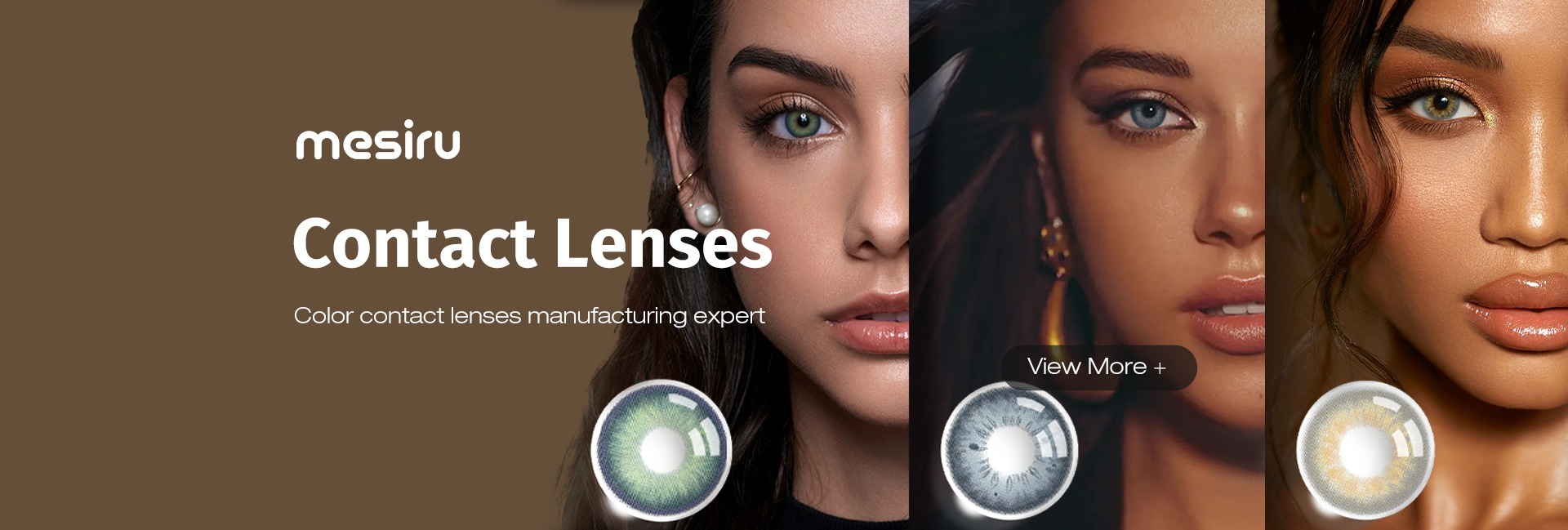
| 3. Mesirulens Tech (Korea-China OEM Hub) | Automated Cast Moulding + Class 100k Cleanroom | 2-HEMA, HEMA-GMA, NVP Hydrogel (38-42% H2O) | CE MDR (Annex XVI ready), FDA, ISO 13485 | 50 pairs (Stock) / 500 (Custom); 5-15 Days | Massive agility with 3,000+ ready SKUs, full French/EU bilingual labeling, and turnkey custom OEM cartons. |
| 4. Dueba Contact Lens | Spin-Cast & Lathe-Cut Hybrid | HEMA Copolymer (38% Water) | MFDS, CE, ISO 9001, ISO 13485 | 1,000 pairs / order; 3-5 Weeks | Exceptional color depth consistency and broad base curve stability across toric astigmatic ranges. |
| 5. NEO Vision Co., Ltd. | "Sandwich" Cast Process | 2-HEMA, Phosphorylcholine (MPC) blends | CE, ISO 13485, KGMP, Russia GOST | 2,000 pairs / SKU; 4-5 Weeks | MPC-infused polymers providing anti-protein deposition and superior all-day lubricity. |
| 6. Dreamcon Co., Ltd. | Cast Moulding with Plusierus Tech | Polymacon, High-Moisture GMA Blends | US FDA 510(k), CE 1023, ISO 13485 | 1,500 pairs / SKU; 4-6 Weeks | Patented Plusierus technology completely encapsulating dyes within the inner polymer core. |
| 7. Bescon Co., Ltd. | Cast Moulding & Edge Profiling | Terpolymer hydrogel, Dk/t 20 | MFDS, CE, ISO 13485 | 2,000 pairs / order; 5 Weeks | Proprietary smooth-tapered edge geometry maximizing tear exchange under the contact lens periphery. |
| 8. Belmore Contact Lens | Automated Micro-Injection Moulding | HEMA / NVP high-wettability matrices | KGMP, CE, ISO 13485 | 1,000 pairs / design; 4 Weeks | Ultra-fine pixel dot printing delivering translucent, natural iris-blending limbal gradients. |
| 9. Vassen Contact Lens | Multi-Layer Cast Moulding | Poly-HEMA (42% Water Content) | MFDS, ISO 13485, CE | 1,000 pairs / SKU; 3-5 Weeks | Widely celebrated for hyper-pigmented theatrical, cosplay, and dramatic 14.5mm–15.0mm diameter big-eye optics. |
| 10. PolyVue Technology (Korea Facility) | Precision Hydro-Moulding | Silicone-HEMA Hydrogel Hybrids | CE, US FDA 510(k), CFDA, ISO 13485 | 3,000 pairs / SKU; 6 Weeks | Exceptional optical aberrational control, reducing spherical aberrations in powered cosmetic prescription lenses. |
Micro-Encapsulation & Polymer Chemistry in Modern Circle Lenses
Examining the microscopic interface: How Korean optical factories balance corneal health, color saturation, and structural durability.
Sandwich Encapsulation Technology
Traditional, sub-standard color lenses applied pigment onto the lens surface, introducing severe risks of pigment leaching, abrasive epithelial keratopathy, and microbial adherence. South Korean tier-1 manufacturing enforces a strict three-layer sandwich design. Highly purified organic and inorganic pigments (iron oxides, titanium dioxide, phthalocyanine) are entrapped precisely between two transparent hydrogel polymer shells. Surface profilometry confirms zero roughness variations across the optical zone, safeguarding the delicate corneal epithelium.
Cast Moulding vs. Lathe Cutting
While mechanical lathe cutting is suitable for rigid gas permeable (RGP) or custom prosthetic lenses, mass-market cosmetic circle lenses demand the optical fidelity of double-sided computerized cast moulding. Automated micromirror-polished moulds inject monomer mixtures under vacuum to eliminate micro-bubbles. Thermal or UV polymerization yields lenses with molecularly smooth edges, repeatable base curves (typically 8.6mm ± 0.05mm), and uniform center thicknesses down to 0.06mm for enhanced oxygen permeability.
Advanced Hydrogel & MPC Formulations
Modern circle lens chemistry has transcended standard Poly-HEMA (2-hydroxyethyl methacrylate). Contemporary formulations blend HEMA with hydrophilic comonomers such as NVP (N-vinylpyrrolidone) and GMA (glycerol methacrylate), achieving equilibrium water content (EWC) between 38% and 58%. Cutting-edge lines incorporate MPC (2-methacryloyloxyethyl phosphorylcholine), a biomimetic polar phospholipid polymer that suppresses protein adsorption, stabilizes the lipid layer of the pre-corneal tear film, and prevents contact lens-induced dry eye (CLIDE).
Future Sourcing & Procurement Trends: 2025–2030
Key market indicators shaping supply chain diversification, regulatory scrutiny, and consumer demand profiles across Europe, North America, and the Middle East.
Aesthetic Realism & "Maquillage Nude"
The historical demand for exaggerated, opaque 14.8mm "anime doll" black lenses has definitively pivoted toward understated, multi-tone translucent gradients. High-growth B2B procurement focuses on 14.0mm to 14.2mm outer diameters with feathered micro-dot limbal rings that simulate natural stromal architecture, blending harmoniously with dark brown, hazel, and deep green irises.
Shift to Daily Disposables (1-Day Si-Hy)
While yearly and monthly vial-packed lenses remain volume leaders in developing markets, tier-1 markets (Western Europe, Japan, North America) are aggressively shifting to daily disposable blister packs. Silicone hydrogel (Si-Hy) daily circle lenses mitigate compliance errors, eliminate lens case contamination risks, and deliver oxygen transmissibility ratings (Dk/t > 60) compatible with healthy prolonged wear.
Regulatory Tightening: EU MDR Annex XVI
Under the European Union Medical Device Regulation (EU) 2017/745, non-corrective (plano) cosmetic colored lenses are officially classified as medical devices under Annex XVI. Sourcing from non-compliant gray-market vendors now poses catastrophic customs seizure risks. Importers require complete technical documentation: Declaration of Conformity, Notified Body CE audit reports, clinical evaluation reports, and multi-language IFUs.
Agile Private Labeling & Micro-Batches
The growth of digital social commerce (TikTok Shop, Instagram DTC) necessitates rapid stock replenishment and localized branding. Forward-thinking wholesalers bypass rigid 10,000-unit factory minimums by partnering with agile contract manufacturers offering hybrid solutions: pre-sterilized, fully compliant stock lenses paired with localized custom carton printing, customized barcode labeling, and rapid 7-day fulfillment.
Why Global Optical Importers Partner with Mesirulens
Combining Korean polymer precision with large-scale cleanroom automated assembly, turnkey private-label customization, and full European regulatory support.
Class 100,000 Cleanroom Infrastructure
Our automated production floors operate within monitored Class 100,000 cleanroom environments. Temperature, humidity, particulate thresholds, and positive pressure air currents are strictly calibrated in accordance with ISO 14644-1. Every production line integrates fully automated cast moulding, steam autoclave sterilization at 121°C for 20 minutes, and 100% video-optical inspection to detect edge abrasions, pigment eccentricities, and surface pitting.
Extensive Inventory & 3,000+ Active SKUs
Eliminate 90-day lead times. We maintain an active inventory exceeding 3,000 SKUs encompassing natural nude, multi-tone hazel, glowing iris, realistic grey, and dramatic theatrical cosmetic lenses. Stock orders depart our central warehouse within 3 to 7 business days, allowing our retail and wholesale partners to capture immediate seasonal fashion cycles without tying up immense working capital.
Full ODM Toric & Optical Prescription Range
Cosmetic lenses should not exclude myopic or astigmatic wearers. Our ODM optical engineering lines formulate powers spanning plano (0.00) down to -8.00 D in 0.25 D increments. For specialized markets, we offer prism-ballasted or dynamic-thinning toric circle lenses that maintain axial stability, ensuring customers enjoy 20/20 visual acuity paired with natural cosmetic iris enlargement.
Custom Packaging & Localized Compliance
From custom embossed cartons and blister foil artwork to multi-language instructions for use (IFU), our design atelier coordinates every packaging detail. For French and European distributors, we guarantee compliant labeling featuring CE marking, Notified Body number, UDI (Unique Device Identifier), batch coding, expiry dates, and French/English safety warnings ready for immediate retail shelf placement.
Certified Quality Management: ISO 13485
Quality assurance is embedded in our corporate governance. Certified under ISO 13485 for medical device manufacturing, our quality manual enforces comprehensive raw material traceability, monomer purity gas chromatography, saline pH buffering (7.2 ± 0.2), osmolarity testing (300 mOsm/kg), and finished goods cytotoxicity screening to ensure zero irritation under real-world ocular conditions.
Streamlined Global Logistics: DDP & Express Air
Cross-border medical shipping demands absolute accuracy. We provide comprehensive shipping solutions, including door-to-door Delivered Duty Paid (DDP) by express air to Paris, Frankfurt, London, and New York. Customs declarations, medical import paperwork, and freight handling are handled methodically, eliminating port clearance bottlenecks and regulatory delays.
B2B Procurement & Technical FAQ
Clear, technically rigorous answers for optical distributors, medical supply purchasers, and retail chain buyers.
What distinguishes Korean circle lenses from regular cosmetic contact lenses?
Are cosmetic circle lenses legally regulated under the European Union MDR 2017/745?
How does the sandwich encapsulation method guarantee eye safety?
What are the standard dimensional parameters for circle lenses?
- Overall Diameter (DIA): 14.0 mm to 14.5 mm (14.2 mm is the global standard for natural cosmetics; 14.5 mm offers theatrical enhancement).
- Graphic Diameter (G.DIA): 13.0 mm to 13.8 mm, defining the actual printed color spread.
- Base Curve (BC): 8.5 mm to 8.7 mm (8.6 mm fits over 85% of human corneal curvatures comfortably).
- Center Thickness: 0.06 mm to 0.09 mm at -3.00 D.
- Water Content: 38% to 42% for durable yearly/monthly lenses; up to 55% for daily disposables.
What is the minimum order quantity (MOQ) for custom private label (OEM) packaging?
Can you provide prescription circle lenses for myopia and astigmatism?
What is the expected shelf life and transit stability for sterile blister packs?
How do you assist wholesale buyers with import clearance and duty handling?
Elevate Your Cosmetic Eyewear Line with Proven Optical Excellence
Whether you require fast-dispatch stock from our 3,000+ SKU inventory or end-to-end OEM custom development with CE/FDA-compliant private label packaging, our ophthalmic engineering team is ready to assist your commercial launch.