Engineered Iris Formulations: Top 8 Core Sourcing Recommendations
Tested on diverse international natural eye pigments ranging from deep African and Asian dark-brown irises to light Caucasian hues. Manufactured using biocompatible cast-molding encapsulation.
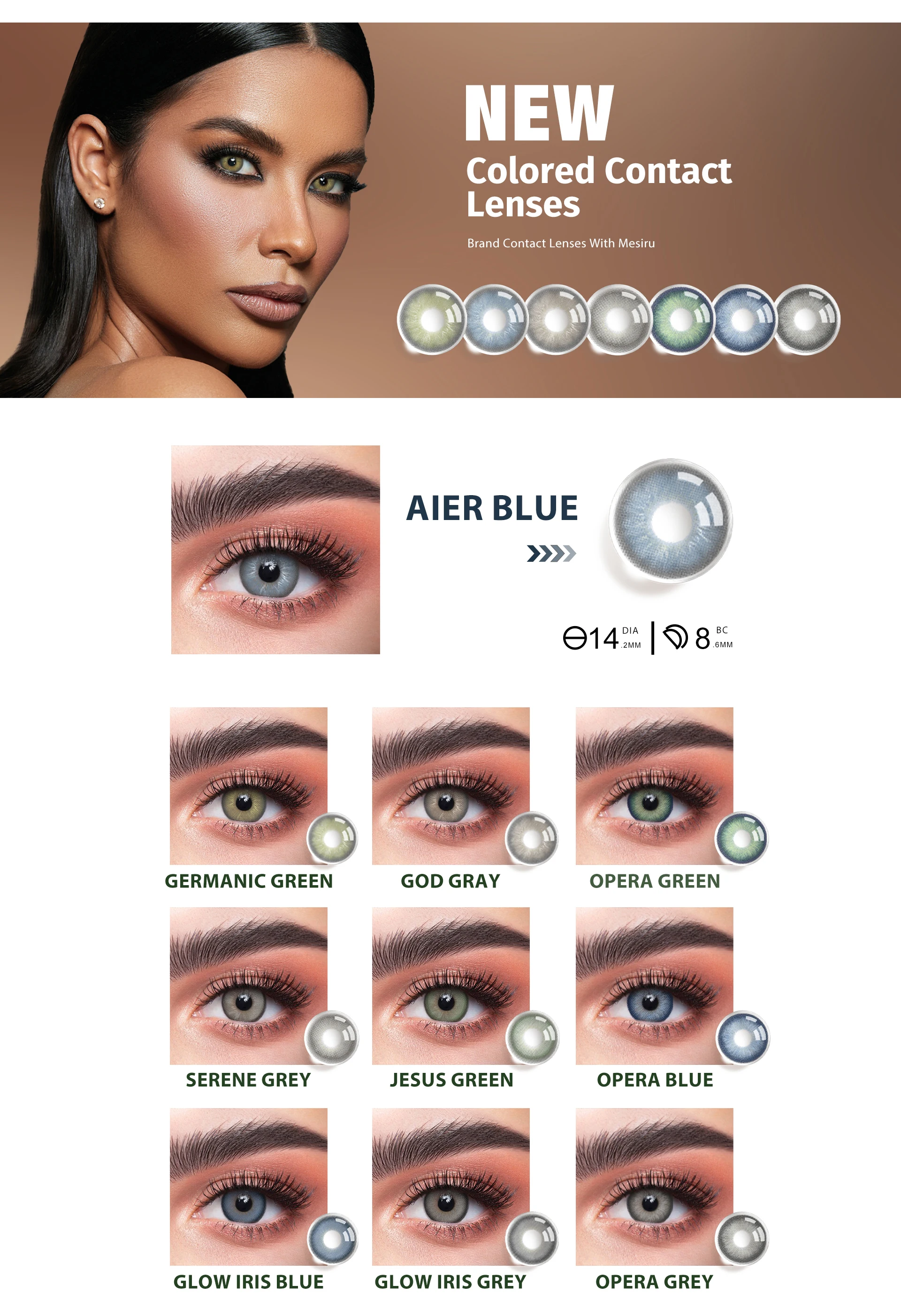
R2 Aier Blue Cosmetic Lens
- Diameter (DIA): 14.2 mm
- Base Curve (BC): 8.6 mm
- Water Content: 38% - 42% Poly-HEMA
- Power Range: Plano 0.00 to -8.00 D
- Cycle Duration: Monthly / Yearly Replaceable
R1 Germanic Green Lens
- Diameter (DIA): 14.2 mm
- Base Curve (BC): 8.6 mm
- Pigment Tech: Sandwich Enclosed Matrix
- Power Range: 0.00 to -8.00 D (0.25 Steps)
- Classification: Medical Device Class II
R3 God Gray Hybrid Series
- Diameter (DIA): 14.2 mm
- Base Curve (BC): 8.6 mm
- Oxygen Transmissibility: High Dk/t Permeability
- Target Market: Global Multi-Ethnicity
- Replacement: Daily / Monthly Blister
R8 Opera Green Vibrant Series
- Diameter (DIA): 14.2 mm
- Base Curve (BC): 8.6 mm
- Coverage: Opaque 3-Tone Iris Feathering
- Power Range: Plano & Custom Myopia
- Sterilization: High Pressure Moist Heat 121°C
R4 Serene Grey Subtle Edit
- Diameter (DIA): 14.2 mm
- Base Curve (BC): 8.6 mm
- Pupil Aperture: Optimized Wide Optical Zone
- Color Lock: Zero Direct Corneal Contact
- Packaging: Dual Blister / Glass Vial
R5 Jesus Green Natural Blend
- Diameter (DIA): 14.2 mm
- Base Curve (BC): 8.6 mm
- Material Composition: HEMA-NVP Hydrogel
- Edge Profile: Smooth Multi-Curve Edge
- Certification: CE, ISO 13485, Declaration of Conformity
R9 Opera Blue Radiance
- Diameter (DIA): 14.2 mm
- Base Curve (BC): 8.6 mm
- Limbal Design: Softened Outer Definition
- Water Retention: Low Dehydration Rate Matrix
- Custom Branding: Private Label Box / Foil Leaflet
R6 Glow Iris Blue Luminary
- Diameter (DIA): 14.2 mm
- Base Curve (BC): 8.6 mm
- Pigment Micro-Dot: High-Density Radial Pattern
- Specialty Function: E-Commerce & Social Video Ready
- Compliance: EU MDR Annex XVI Formatted
Shenzhen Mesirulens: Advanced Manufacturing Scale & Cleanroom Rigor
In the high-precision domain of medical device fabrication, aesthetic brilliance is meaningless without absolute toxicological biocompatibility and micron-level repeatability. Shenzhen Mesirulens Technology Co., Ltd. operates as a specialized original equipment manufacturer (OEM) and original design manufacturer (ODM), bridging state-of-the-art optical engineering with agile supply chain efficiency.
Our centralized production facility is anchored by continuous Class 100,000 cleanroom environments (equivalent to ISO 14644-1 Class 8 standards). Here, atmospheric particulate parameters, relative humidity, and positive air pressure are tightly monitored to prevent microbial contamination during casting, demolding, and packaging.
Unlike conventional lathe-cut colored contact lenses, which often suffer from irregular edges and inconsistent surface thickness, our automated lines utilize dual-sided precision cast molding. This ensures perfectly reproducible base curves (8.6 mm) and smooth tapered edges, eliminating mechanical friction against the palpebral conjunctiva.
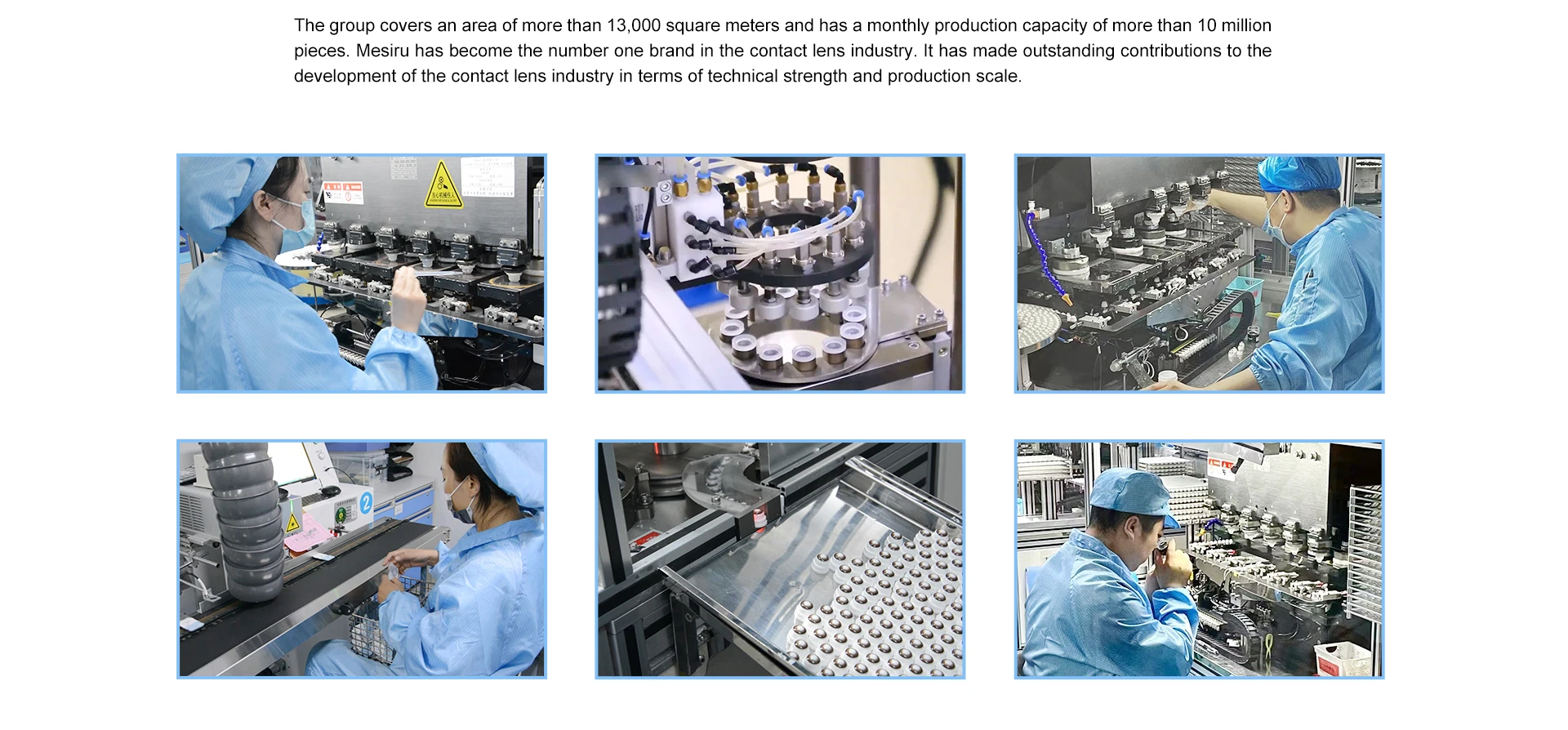
Full Traceability & Laser Coding
Every individual blister features indelible thermal laser lot encoding directly linking the finished unit to monomer formulation logs, technician shifts, and sterilization cycle graphs.
Rapid Dispatch Architecture
With an active inventory maintaining over 3,000 SKUs, stock collections ship within 3–7 business days, providing unrivaled restocking agility for regional wholesalers and DTC optical brands.
Full Custom Turnkey OEM
Turnkey packaging solutions: custom blister foil heat-sealing, multi-lingual Instructions for Use (IFU), and FSC-certified retail rigid boxes printed in customer-specific Pantone palettes.
Global Contact Lens Sourcing Trends: Strategic 2025–2030 Projections
How shifting international trade dynamics, direct-to-consumer digital channels, and evolving optical retail margins are restructuring overseas contract manufacturing.
1. The Transition from Pure Cosmetic Appeal to Dual-Correction Hybrid Optics
Historically, colored contact lens manufacturing was split between plano cosmetic novelties and clinical clear corrective lenses. Today, international procurement data indicates over 68% of cosmetic lens end-users require mild to severe refractive correction. Overseas optical chains and indie beauty incubators are abandoning single-function stock. Sourcing contracts are transitioning toward manufacturers capable of supplying full-diopter lines (from plano 0.00 down to -8.00 D in 0.25 D increments), with emerging demand for toric (astigmatic) color lenses featuring prism-ballast or peri-ballast rotational stabilization.
2. Regulatory Harmonization and the Annex XVI Reality
Under the European Union Medical Device Regulation (EU) 2017/745 (MDR), non-corrective aesthetic lenses are formally classified alongside corrective medical devices under Annex XVI. Importers can no longer treat cosmetic colored contact lenses as basic consumer goods. Overseas buyers are consolidating their vendor portfolios, purging uncertified local traders, and aligning exclusively with Chinese tier-1 original manufacturers possessing verifiable ISO 13485:2016 quality management systems, complete Technical Files, and accredited Notified Body CE certificates.
3. Agile Low-MOQ Sampling Coupled with Scalable Fulfillment
In response to short-lived social media trend cycles (TikTok beauty aesthetics, Instagram filtration looks), brand managers require fast testing loops. The traditional mandate of 50,000-piece single-color commitments is obsolete. The competitive standard established by Mesirulens allows overseas brands to initiate test pilots across diverse mixed shades with minimum order quantities (MOQs) starting under 100 pairs per power, scaling smoothly into mass runs exceeding 500,000 monthly units once sell-through is validated.
| Procurement Metric | Traditional Trading Intermediaries | Tier-1 China OEM (Mesirulens) | Strategic Business Impact |
|---|---|---|---|
| Material Matrix | Standard Lathe-Cut HEMA (38% H2O) | Cast-Molded Hydrogel & Silicone Formulations | Higher tear exchange, reduced hypoxia risk |
| Pigment Encapsulation | Surface printing (Friction Risk) | 3-Layer Sandwich Molecular Bonding | Zero pigment elution, strict cornea safety |
| Regulatory Documentation | Third-party generic certificates | Factory-direct CE, ISO 13485, Full IFU Dossier | Smooth customs clearance (EU / NA / LATAM) |
| Supply Chain Velocity | 45–60 days outsourced turnaround | 3–7 days stock dispatch; 20 days OEM mass | Lower working capital requirements |
| Prescription Scope | Plano (0.00) only | 0.00 to -8.00 D + Custom Toric Development | Captures broader demographic market share |
Next-Generation Optical Formulation: Biomaterials & Color Rendering
Evaluating the material science driving modern contact lens production: polymer oxygen transmissibility, hydration mechanics, and micro-dot rastering.
Biocompatible Hydrophilic Copolymers
Modern formulations balance water content between 38% and 42%. While ultra-high water hydrogels (>60%) sound attractive, they draw moisture away from the precorneal tear film, exacerbating evaporative dry eye. Mesirulens relies on an optimized HEMA-NVP blend maintaining structural lubricity throughout long wear sessions.
Precision Micro-Dot Printing Matrices
Flat, painted lenses appear fake. Natural irises possess intricate radial fibers, ciliary furrows, and subtle limbal gradations. Mesirulens utilizes high-resolution multi-pass micro-dot pad printing that blends smoothly with the underlying pupil, delivering authentic color transformation without blocking the optical zone.
Integrated UV & HEV Radiation Filtering
Next-generation colored lenses are incorporating organic benzotriazole ultraviolet-absorbing monomers directly into the polymer network, blocking over 85% of UVA and 98% of UVB radiation to protect the crystalline lens without altering perceived color saturation.
Standardized 6-Phase Cleanroom Production Architecture
To guarantee zero batch-to-batch variation across diopter curves, diameter tolerances (±0.05 mm), and pigment containment, our manufacturing plant enforces a strict 6-stage lifecycle:
Ultra-Precision Cast Tooling
Optically diamond-turned master molds yield optical-grade polypropylene negative and positive casting cups.
Sandwich Micro-Pigment Pad Printing
Non-toxic color layers are applied to the mold cup, followed immediately by secondary clear monomer coating.
Thermal & UV Photo-Polymerization
Curing tunnels solidify the liquid monomers into a homogenous, crosslinked solid matrix.
Hydration, Extraction & Swelling
Submerged in saline baths, lenses absorb water, releasing unreacted monomers to ensure biological safety.
100% Automated Optical Inspection (AOI)
High-speed digital imaging cameras scan every edge for micro-tears, bubbles, or pigment anomalies.
High-Pressure Steam Autoclave
Sealed in medical-grade foil blisters, units undergo moist heat terminal sterilization at 121°C for 20 minutes.
Frequently Asked Questions: Global Sourcing, Regulatory Compliance & OEM
Expert answers addressing customs risk, laboratory testing data, private labeling requirements, and operational lead times.
How does Shenzhen Mesirulens satisfy the regulatory requirements of EU MDR (2017/745) Annex XVI for cosmetic lenses?
What is the minimum order quantity (MOQ) for custom private-label (OEM) packaging versus in-stock catalog orders?
Can you manufacture prescription colored contact lenses for astigmatism (toric cosmetic lenses)?
What testing is conducted to ensure pigments never elute or cause corneal irritation?
What Incoterms and customs clearance arrangements do you support for overseas importers?
Do you supply complementary care products, such as multipurpose contact lens solution and cases?
Ready to Build or Scale Your Colored Contact Lens Brand?
Connect directly with our senior optical engineering and OEM project management team. Request our latest master product catalog, certified physical samples, and custom quotation models.
Contact Us