 Hydrogel 38%
R2 Aier Blue
Luminous ice-blue undertone with a delicately feathered limbal transition designed for dark Asian and Mediterranean irises.
Product Dossier →Engineered via precision cast-moulding and encapsulated sandwich-pigment architecture for optimal corneal breathability, true-to-life iris depth, and uncompromising ocular safety.
Hydrogel 38%
Luminous ice-blue undertone with a delicately feathered limbal transition designed for dark Asian and Mediterranean irises.
Product Dossier → Deep Pigment
Natural olive-forest pigment matrix featuring subtle micro-stippling that diffuses ambient daylight organically.
Product Dossier → Top Seller
Multi-tonal neutral platinum tone incorporating charcoal peripheral framing to deliver visual depth without starkness.
Product Dossier →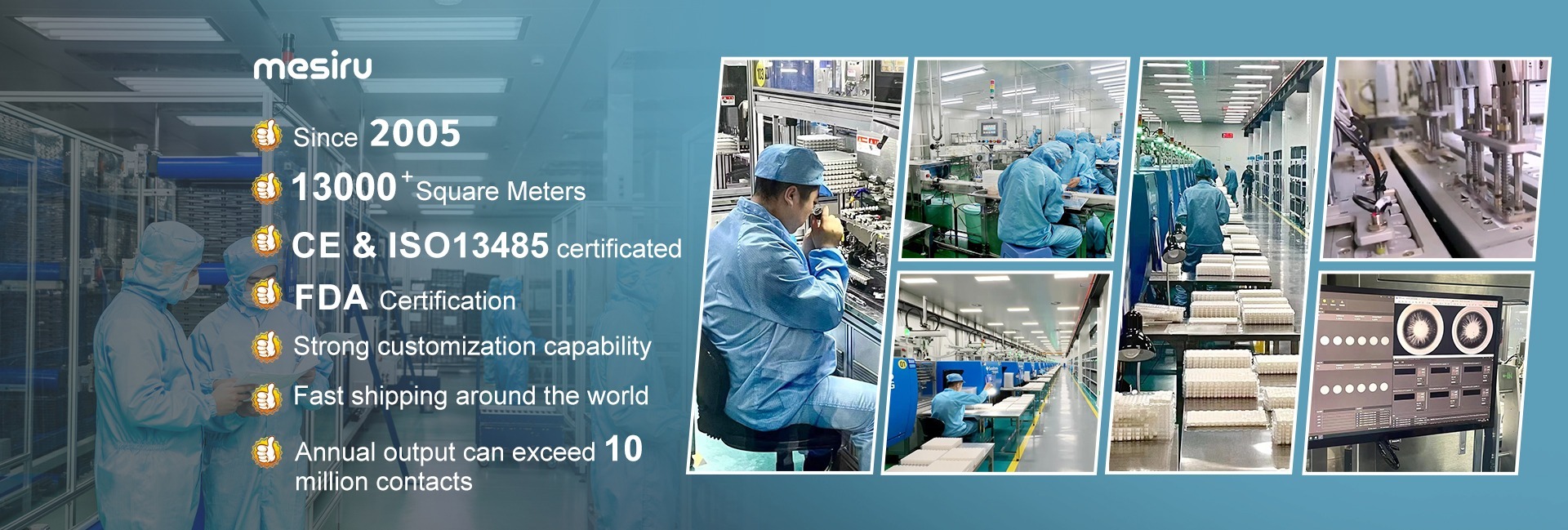 Dual Tone
High-chroma emerald formulation engineered with high Dk/t materials for comfortable long-wear retail execution.
Product Dossier → Soft Limbal
Understated smoky mist gradient calibrated for minimal edge flare and smooth pupillary margin alignment.
Product Dossier → Aesthetic Glow
Warm moss tones blended seamlessly with hazel mid-tones for an organic, daylight-responsive appearance.
Product Dossier → Vibrant Iris
Sapphire-infused micro-dots engineered for photographic, live-stream, and cinematic vibrancy under studio conditions.
Product Dossier → Glow Iris Series
Radiant sky-blue gradient featuring our patented optical sandwich isolation layer to guard corneal tissue.
Product Dossier →The global cosmetic and corrective contact lens sector is witnessing an unprecedented convergence of ocular health regulations, polymer engineering breakthroughs, and rapid cosmetic consumer demand. Historically relegated to novelty costume wear, colored contact lenses are today categorized across premier global markets—including the European Union under Medical Device Regulation (EU) 2017/745 (MDR) Annex XVI and the United States via FDA 21 CFR Part 886—as Class IIa or Class II medical devices requiring stringent biological safety evaluation, clinical evaluation, and strict traceability.
For wholesale purchasers, volume distributors, and private-label brand owners, partnering with a dependable Original Design Manufacturer (ODM) and Original Equipment Manufacturer (OEM) is no longer solely an exercise in unit-cost minimization. It is an exercise in structural risk mitigation. Regulatory audits, notified body verifications, chemical leachability profiles, oxygen transmissibility (Dk/t metrics), and pigment encapsulation permanence are the baseline parameters that dictate shelf authorization, customs clearance, and brand continuity in competitive markets across Europe, North America, the Middle East, and the Asia-Pacific region.
Shenzhen Mesirulens Technology Co., Ltd. delivers full-lifecycle manufacturing sovereignty, integrating cast-mould tooling, biomedical compounding, automated cleanrooms, and turnkey regulatory dossier packages.
Our bio-compatible multi-layer color printing locks organic and inorganic pigment formulations completely inside the hydrogel polymer matrix. No colorant molecules ever contact human corneal epithelial cells, eliminating pigment exfoliation and irritation risks entirely.
Operating within ISO 14644-1 certified Class 100,000 clean environments equipped with HEPA filtration, automated wet-mould hydration, and online closed-circuit video inspections ensuring non-pyrogenic, sterile output compliant with ISO 13485 standards.
With an active catalogue exceeding 3,000 ready-to-ship SKUs across plano and powers up to -8.00 D, our warehouse structure empowers fast-fashion beauty brands and optical chain wholesalers to execute low-MOQ trial orders with 3–7 day dock dispatch.
Turnkey compliance packages tailored for the European Union (CE Mark under MDR 2017/745), US FDA device listings, GXP audit documentation, French/English bilingual IFUs (Instructions for Use), and ISO 10993 cytotoxicity and ocular irritation reports.
Beyond plano cosmetic lenses, our specialized optical engineering facility fabricates customized prism ballast and peri-ballast toric colored lenses, enabling optical specialists to cater to astigmatic wearers neglected by conventional lifestyle lens brands.
Comprehensive creative engineering covering custom blister foils, blister blister bowls, medical-grade carton printing with anti-counterfeiting QR serialization, multilingual leaflet localization, and matching bespoke lens care accessories.
Essential market intelligence for global supply chain leaders navigating the evolving landscape of cosmetic ophthalmics through 2026–2030.
While yearly and monthly wear modalities historically dominated wholesale volume across Eastern Europe, Latin America, and Southeast Asia due to perceived retail economy, premier Western retail chains and online brands are migrating decisively toward daily disposable (1-Day) modalities. Driven by heightened consumer awareness around ocular hygiene, zero maintenance, and lowered incidence of microbial keratitis, institutional buyers must partner with manufacturers whose high-cavitation cast-mould tooling can deliver unit economies viable for 10-pack and 30-pack daily retail cartons.
Cosmetic lenses without corrective power are subjected to identical notified-body scrutiny as prescription contact lenses within the European single market. Importers and wholesalers in countries such as France, Germany, and the Benelux zone can no longer rely on unverified intermediary trading declarations. Enterprise procurement teams are requiring direct factory relationships that provide continuous batch-level tracking, certified biological evaluation reports (ISO 10993-5 cytotoxicity, ISO 10993-10 irritation), and authenticated Unique Device Identification (UDI) system integration on external labeling.
Generic single-tone or high-opacity block designs are experiencing sharp drop-offs in repeat purchase velocity. Contemporary aesthetic consumers demand nuanced chromatic layering—utilizing two-tone, three-tone, and black-spot radial printing that interacts dynamically with natural melanin distribution in hazel, deep brown, and amber irises. Procurement teams must source manufacturers capable of micro-precision dot matrix printing down to 10-micron resolution to satisfy Gen-Z and millennial aesthetic standards across TikTok Shop, Amazon, and boutique optical salons.
The boundary separating purely cosmetic fashion lenses from corrective ophthalmic devices has disintegrated. A rising majority of contact lens wearers exhibit refractive errors (myopia from -0.50 D to -8.00 D, as well as mild-to-moderate corneal astigmatism). Forward-looking B2B buyers avoid suppliers restricted to zero-power (plano) inventory. Modern wholesale contracts prioritize manufacturers maintaining deep automated power inventory and low-friction bespoke ODM capabilities for toric axes and power curves.
The contact lens manufacturing sector is undergoing an intensive technological revolution governed by polymer chemistry and automation. The standard hydrogel compound (hydroxyethyl methacrylate, or HEMA) that served as the industry workhorse for four decades is increasingly augmented by silicone hydrogel (SiHy) platforms. Silicone hydrogel formulations combine the mechanical flexibility of hydrogels with the high oxygen permeability inherent to silicone networks, yielding oxygen transmissibility coefficients exceeding 80–120 Dk/t, compared to 20–30 Dk/t typical of conventional hydrogels.
Furthermore, precision manufacturing has evolved from legacy lathe-cutting techniques into high-speed, fully automated closed-loop Cast-Moulding Technology. In modern cast-moulding facilities, optical-grade polymer resins are injected into diamond-turned master moulds within sterile micro-environments. Polymerization occurs through controlled ultraviolet (UV) or thermal curing, ensuring dimensional stability with tolerances within ±0.01 mm across base curves (typically 8.5 to 8.7 mm) and total diameters (14.0 to 14.5 mm).
Simultaneously, edge-profile geometry has been elevated to an exact science. Proprietary comfort edge contours (rounded bevel profiles) promote tear-film exchange during spontaneous blinking, significantly reducing dry-eye symptoms and conjunctival hyperaemia during extended 12-hour wear cycles. On the environmental side, leading cleanrooms are deploying dry-state automated visual defect scanning with artificial intelligence vision systems, minimizing blister reject waste and reducing saline solution consumption during hydration stages.
In-depth responses authored by our regulatory affairs and production engineering teams to streamline your B2B sourcing evaluation.
Partner with an authoritative, compliance-certified manufacturer. Receive our comprehensive wholesale shade catalog, request physical sample evaluation kits, or begin private-label formulation discussions today.
Send an Inquiry